

By Theodore Shoebat & Walid Shoebat
Intro
The two most talked about people in history are Jesus and Adolf Hitler. One came to save the Jews and the other came to destroy them. But the Jews rejected Christ, and instead focused on tribe. They focus on bloodlines — the race of Israel — and soil — the land of Israel — and thus, obsessing over race and land, they became possessed by the very spirit that led to the Nazi extermination of the Jews. Hitler and his party saw the Jews as parasites and enemies of their race, and the hardline Jews see non-Jews — like the Palestinians — also as parasites and enemies of their race. For this reason, the Jews exterminated Palestinians in the name of fighting terrorism. This ocean of bloodshed has vastly had a hand in today’s rise in antisemitism. To many eyes, “Israeli” has become one and the same as mass murderer. But there is an historical parallel between what has been happening now and what happened in the 20th century, before and during the time of the Nazi reign of terror. In those days, “Jew” became synonymous with “Bolshevik,” a political movement that was utterly murderous and behind the slaughter of countless lives. Today, Jews are again being associated with mass murder for Israel’s butchering of the Palestinians. And just as it was in the 20th century, the cry for Israel’s destruction abounds. So, we are coming full circle with history. There was a Holocaust, and it will happen again. Look and see what is happening: Israel is more hated now than it ever has been; Turkey — with its neo-Ottoman aspirations — is preparing for a war with Israel over Syria and really dominance over the Middle East. And this is happening in the midst of immense Turkish military expansion in Libya, Iraq and Syria which lies smack right next to Israel, causing much trepidation in Jerusalem. This is happening as Turkey holds a major naval presence on the Eastern Mediterranean and the Israelis are even talking about Turkey imposing a naval blockade on them. Any talk about a possible war between Turkey and Israel is always met with the same hopeful praise of the destruction of Israel. So, it is apparent that what we are witnessing is a return to history. Thus, to better understand the future it is always wise to look at the past, for
“What has been is what will be,
and what has been done is what will be done” (Ecclesiastes 1:9)
The following essay is an observation on how the Germans pointed to the violence of Jewish radicals to justify their ideology of exterminating the Jews in the Holocaust. By doing this, we see how the genocide of the Jews was done under the guise of fighting a real problem, and thus when the second holocaust takes place it will be done under the guise of ending Jewish violence (and zionist violence is indeed a real problem).
When the Nazis went against the Jews, they were not these raving lunatics that you see in cinematic caricatures, but rather they were very intellectual, sophisticated, and they brought up legitimate points and presented themselves as the solution to the real problem of Bolshevism. This fact is almost never brought up in the typical historical narrative of the Holocaust. I would argue that we were never really given a true presentation on the origins of the Holocaust. We talk about the pogroms, the camps and massacres, but we never discuss how the Europeans got to that point. This is both a disservice to history and to justice. If we do not show that the Nazis pointed to facts to justify their ideology — as opposed to portraying them as madmen who just wanted to kill Jews without referencing real problems as justifications for mass murder — then, when the nazis of the future rise up, and point to real problems to justify their ideology, and someone cries out, ‘These people are Nazis, they are evil and out for blood and will bring about tyranny,’ the followers of the modern-day nazis will say, ‘No, no, these are not nazis. The Nazis in the 20th century killed for no reason. These great heroes are actually solving real problems.’ Thus, the way that we have become accustomed to talking about the Holocaust, has ill prepared us for the future nazism. Since we have failed to understand that the Nazis pointed to real problems as pretexts for the Holocaust, then we will fall for the justifications for murder spoken to us by the nazis of the future. In other words, genocides are justified by facts, and since we are failing to learn this — mark our words — it is imminent that we will fall for this very type of justification. Facts, on the tongues of sinister men, can be the most destructive of weapons, and many of us will become their victims. If we do not see that evil is justified by pretexts, then we will fall for the pretexts.
PART 1
Belloc’s Warning And Why A Second Holocaust Is Inevitable
Rabbi Bunem was in the Lodz Ghetto in Poland, and one day, while walking on the street, he was mocked by German soldiers. He was so frightened by the experience, that when he was inside the prayer room, looking at all of the Jews reading from their psalms, he cried out:
“Jews!!! Stop reciting Psalms!!! God is on the side of our enemy!… God is with the Germans! … I beseech you, recite no more Psalms!… Our world is shrouded in darkness.”
And today, we make a similar warning. The days of the Jews being loved as “God’s chosen” or as brilliant people who must be revered as pillars of modern society, are coming to an end. The writing is on the wall that Israel’s demise is nigh. With the rise of Turkey as a major global power, with its navy building a massive presence on the Mediterranean Sea; with its takeover of Syria, which means that the Turkish military is right next to Israel’s border; with the bombing of Israel by Iran being met with the applause of most of the world; with the majority of the citizens of Israel’s biggest allies, now looking at Israel with disdain due to the excessive influence of its lobby and its extermination of the Palestinians; with Jews fleeing Israel and going to other countries (like people jumping off a sinking ship) only to be hated in the countries in which they are seeking refuge; with all of these things happening, it is obvious that the entity that we call Israel is facing its destruction.
The Jews were loved after the Second World War; they were praised as geniuses or as “God’s chosen people.” This phenomenon of Americans embracing the Jews especially began in the late 1960s with the Six Days War, since it was seen as the fulfillment of Bible prophecy. In the secular side of American society, Jews were praised as artistic geniuses who mastered the arts, film and music. Fast forward to 2024, and we see the Atlantic — a very pro-Israel and pro-NATO magazine — publish an article with the headline: “THE GOLDEN AGE OF AMERICAN JEWS IS ENDING”.
This was not an exaggeration. When you see the United States greenlighting the Turks to takeover Syria, and then the US government praises the Turkish takeover of Syria, even after the Israeli government deemed Turkey to be its biggest existential threat, and this is happening regardless of the fact that Turkey is deepening ties with Iran, the writing on the wall for Israel’s end is most clear. Hence why you have record numbers of Israelis fleeing Israel, a testament to the failure of the zionist project. NATO’s second most armed country, Turkey, is getting closer to Iran, and the US is not stopping it, and there is nothing the Israel lobby can do about it. Israel’s acolytes in the US cannot push for a war against Turkey as it has done with Iran, because the former has the legitimacy of a major NATO ally. And this is why Israel is so terrified. Its lobby is helplessly crying out about a country that, in the eyes of the US, is a major ally, one that controls Russia’s only access way from the Black Sea to the Mediterranean (we are talking about the Bosphorus and Dardanelles Straits), and is NATO’s land route directly into Iran and the South Caucasus, thus making it an absolutely necessary ally for the Western powers.
Thus, Turkey can deepen ties with Iran, and no complaints by Israel can change this. And this is all happening in the midst of Israel being hated by Americans and the rest of the world more so now than in any part of the history of the modern Jewish state. Iran and Turkey could make Israel into one Auschwitz, and the earth will clap its hands. And this brings us to the theme of this article: why the Holocaust happened. There seems to be a misconception that before the Holocaust, there had already been an ongoing antisemitism dominating the groundswell of European society for decades prior. While in the years before and during the Holocaust there certainly was immense popularity for Nazi ideas in Europe (hence why so many Europeans partook in the slaughter of the Jews), it is wrong to say that was always the case. Evidence for this is the fact that when the anti-Jewish Kristallnacht pogrom broke out in 1938, there had not been an anti-Jewish pogrom in Germany for centuries.
The historian Hilaire Belloc (who is accused of being an antisemite when the reality is that he was warning of a future extermination of the Jews), writing in 1922 (so eleven years before the Nazis took over Germany) saw the writing on the wall that the Europeans were going to be violent toward the Jews. He foresaw the future because he could sense what was happening at his current time: that people were beginning to see the Jews as associated with Communism and other evils, and thus they were deemed as a threat. But, Belloc also described how the world was before it came to this point, and its not that different from the era that existed prior to the present time wherein Israel’s popularity has begun to free fall.
Amazingly (as if we are reading about our own times), he recalls that there was a time when the accusation of “antisemitism” was actually taken seriously, and how eventually the word lost all of its power. We have reached this same point. Firstly, Belloc warns about “pretending that the problem” with Jewish culture “is not there.” For the longest time since the end of the Second World War, this was the case. Any talk about the Israel lobby or perhaps about Jewish involvement in insidious movements (such as in the abortion, pornography or sodomite agendas) was scolded as a conspiracy theory, or worse, an antisemitic one. This was the same case in Belloc’s time years prior to the rise of the Nazis. Belloc points out that this extreme of pretending as if there are no problems within Jewish culture “was an almost universal folly in the immediate past, especially in this country [Britain].”
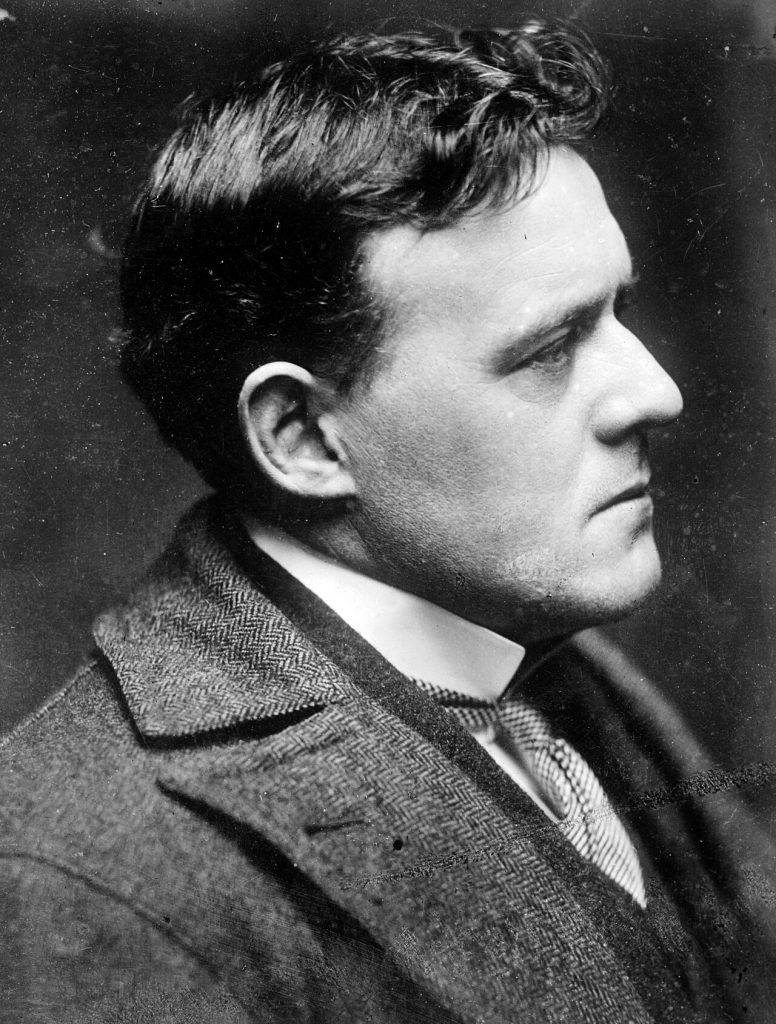
Hillaire Belloc
But, he goes on to say that “It is now abandoned by all of our generation save a few people of an official sort, and these will not long maintain an attitude outworn and already ridiculous.” So it is in our own time. That the majority of Americans now hold an unfavorable view towards Israel, and that the pro-Israel population is but a small percentage of the people who are mainly of the Boomer generation, attests that we are living in a parallel time to that of Belloc’s. Belloc also warns against the opposite extreme: that of hatred towards the Jews. He describes this hatred, not as something that had always been around, but as “a recent phenomenon” that “has gained very great strength in recent years and is increasing alarmingly.” Belloc was alarmed by the rise of animosity towards Jews, and this was in 1922, thus proving that in the era prior to the Holocaust in Europe, Jews lived comfortably and antisemitism was not the mainstream.
But there was a sudden shift. Belloc forewarned that this shift against the Jews had within it a movement of people who sought for the extermination of the Jewish race: “It is the extreme manifested by those who have but one motive in their action towards the Jewish race, and that motive a mere desire for its elimination.” Belloc writes how “this new extreme of active hatred is flourishing; that other, older extreme no longer functions.” In other words, enmity towards the Jews was rising, while the ignoring of Jewish evils was dying out.
How is this different from our own time period? For decades, going back to the 1960s and 70s, to be pro-Israel or a Judeophile was a bipartisan issue for both Democrat and Republican. Whatever evils Israel did was overlooked, as if they did not happen (such as the Sabra and Shatilla massacres organized by Israel in 1982). But now, everyone knows about the evils of Israel, and as in the days of Belloc, there are two camps. One camp does not have hatred towards Jewish people, but rather for the state of Israel, and will have in its ranks Jews who hold the same criticism towards the zionist entity. The other camp holds the same criticisms towards Israel, but with a Hitlerian vision. This latter camp will point out the evils of Israel and say that they are proofs that Hitler was correct about the Jews and that history has libeled him. Belloc predicted (again, in 1922) that the Western world would have to deal with two phenomenas: the power of Jewish influence as a foreign entity within Western countries, and the hatred towards the Jews as a response to that foreign influence:
“The near future will have to deal, in practical politics, not only with the problem presented by the Jews as an alien power within the State, but (what will probably prove a more difficult matter) with the hater of the Jew, who is claiming, and rapidly achieving, power on his side.”
And we speak with Belloc when we say, that the world is right now confronting the reality of Jewish influence that is done for the foreign power of Israel, and at the same time witnessing — with shock — the sudden boom in hatred not just to Israel, but to Jews as well.
And what are some of the biggest points of contention in our own times? Everyone — from the most famous podcasters to the man on the street, — is talking about the Jewish or Israel lobby as a power foreign to their country and yet having undue influence on their country, from the United States to as far as Finland. The people have had enough of this, and in this torrent of rage there lies a most insidious agenda to bring Hitler back from the dead. When the hatred towards Jews was growing in popularity in the early 1920s, Belloc described it as “spreading with an alarming rapidity, and the increase of its intensity is even more remarkable than the increase in the numbers of its adherents.” Again, the fact that Belloc was surprised evinces that it was not the norm, but that it was becoming the norm. This is echoing within our own epoch: pro-Israel and pro-Jewish sentiment was the standard for decades, and now that trend is dying and making way for a return to what alarmed Belloc. Another striking parallel between Belloc’s time and our own was how the label of “antisemite” was once a powerful dissuasion to stop people from criticizing Jews, and then it lost all of its power. Belloc describes how certain Jews threw around the accusation of antisemite for anything from talking about Jewish swindlers to Jewish lobbyists paying parliamentarians. As Belloc writes:
“If a man alluded to the presence of a Jewish financial power in any region—for instance, in India—he was an Anti-Semite. If he interested himself in the peculiar character of Jewish philosophical discussions, especially in matters concerning religion, he was an Anti-Semite. If the emigrations of the Jewish masses from country to country, the vast modern invasion of the United States, for instance (which has been organized and controlled like an army on the march), interested him as an historian, he could not speak of it under pain of being called an Anti-Semite. If he exposed a financial swindler who happened to be a Jew, he was an Anti-Semite. If he exposed a group of Parliamentarians taking money from the Jews, he was an Anti-Semite. If he did no more than call a Jew a Jew, he was an Anti-Semite.”
Belloc recalls how for “something between a dozen and twenty years this policy was successful.” But, as he points out, this strategy ended up backfiring, as people all throughout Europe got so exhausted by the common accusation that they, out in the open, began to criticize the Jews, talking about Jewish influence on government and other matters:
“I say it was a fatal policy; but it was deliberately undertaken by the Jews and they are now suffering from its results. As a consequence you have all over Europe a mass of plain men who so far from being scared off from discussing the Jewish problem by this false ridicule are more determined than ever to thrash it out in the open and to get it settled upon rational and final lines.”
And for decades the label of “antisemite” has been used so sparingly that it has lost its power. As in the days of Belloc, so within recent prior decades it was automatically seen as antisemitic to speak about the Jewish lobby. But also, as in the days of Belloc, the label of antisemitic is shrugged off as everyone is talking about the Israel lobby and showing how Jewish funders finance politicians for the interests of a foreign power. The parallel between what Belloc witnessed and what we are witnessing today is so striking that one cannot help but wonder: if the end result of what Belloc was witnessing ended up with Nazism dominating Europe and the Jews being exterminated, then the end result of what we are witnessing will be the same thing. Belloc, seeing the sudden rise in antisemitism, predicted that the end result would be bloodshed:
“It [antisemitism] is spreading with an alarming rapidity, and the increase of its intensity is even more remarkable than the increase in the numbers of its adherents. Sooner or later—and fairly soon, I imagine—the press will give it voice. When it does, it will give it voice, we may be certain, in the most extreme, the most passionate, the most irrational form; and when that happens, in a field where passion is already so wild, God help its victims!”
If Belloc was writing in 1922 that hatred toward Jews was rising as a reaction to Bolshevik violence and that the end result will be a bloodbath, and that end result was indeed the extermination of the Jews, and today we are seeing a surge in hatred towards Jews as a reaction to Zionist violence, what can we expect but the same thing that happened in Belloc’s era? A new generation of Hitlers will arise, and the lot of the Jews will be what befell their ancestors almost a century ago in Europe. “What has been is what will be, and what has been done is what will be done, and there is nothing new under the sun.” (Ecclesiastes 1:9) Thus, another holocaust is inevitable.
Part 2
The Jews as enemies of culture and nation
Why are Jews hated today? They are seen as donating money to use states for the interests not of the nations they govern, but for a foreign nation (Israel); as people who undermine the traditions of a nation; and they are associated with the mass murder of the Palestinians.
In our own times, there is a sentiment that is being heard most ubiquitously, and that is that the Jews do not have loyalty to the country they live in, but to the Jewish tribe and to Israel first. The call of “America first” is something that threatens the Jewish donor class because of its implication: if one is “America first” then one cannot be “Israel first” which all of the zionist donors certainly are. An event that exemplified this was when Donald Trump was speaking at the Israeli parliament in October of 2025, and he mentioned his major donor, Miriam Adelson — an avowed zionist — who was present in the building, saying that she loved Israel more than the United States, confirming the suspicion that is rising intensely in the zeitgeist of our time:
“I’m going to get her in trouble with this — but I actually asked her once, ‘So Miriam: I know you love Israel. What do you love more, the United States or Israel?’ She refused to answer. That means that might be an issue, I must say”
Trump knew exactly what he was doing, hence why he said: “I’m going to get her in trouble”. He knew very well that the opinion that zionists are “Israel first” is the talk of the day. And so by saying what he said, he simply added fuel to the fire and further confirmed people’s suspicions. There is indeed a parallel between the current spirit of the age and 1920s Germany. Hitler, in a dialogue with his mentor, Dietrich Eckart, speaks of how zionists — and really just Jews — had a loyalty above whatever countries they were citizens of, and to their tribe and to the idea of a state of Israel:
“The resolution of the Pan-Jewish Conference of 1919, in Philadelphia!: ‘The Jews are citizens of the new Jewish state of Palestine, but at the same time they have complete rights of citizenship of whatever countries they choose to live in.’ One must read that non plus ultra of arrogance twice, indeed, a hundred times, in order to be sure one isn’t dreaming. Imagine instead: ‘The English are citizens of Great Britain. Each Englishman who chooses to live in Germany or France or Italy retains all his rights of English citizenship, but at the same time he has the complete rights of citizenship of the country in which he is living.’ Now ask yourself what a scream of indignation, not we or the French or the Italians, but the Jews themselves would raise if the English people had actually made such a resolution! The Pan-Jewish Congress, however, issued its resolution as categorically as a command. This assembly comprised representatives of all the Jews of the world, including the Zionists. Their intentions were, in short, that the Jews should stay where they were and that the new Zion should simply have the purpose, first, to strengthen their political backbone, second, to gratify their arrogance, and last but most important, to provide them a state where they could carry on their dirty business without fear of detection.”
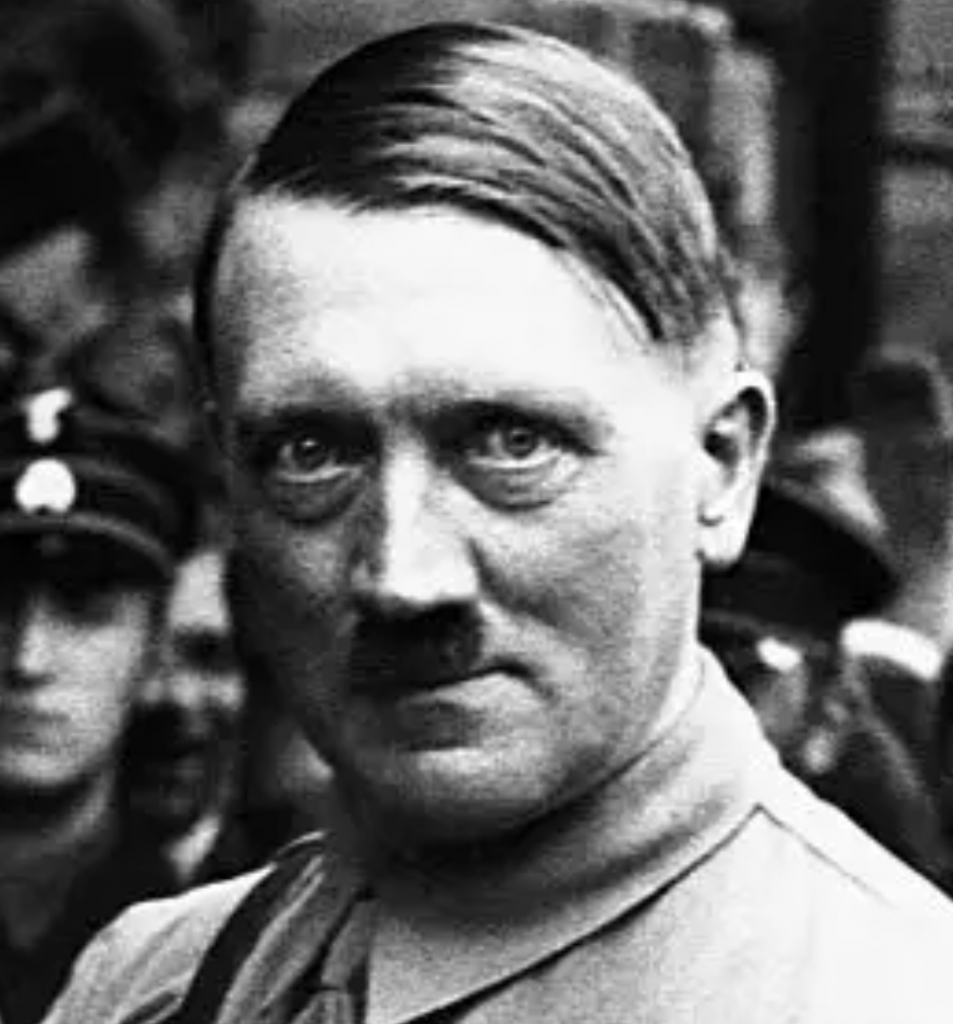
Hitler’s words read almost as if they were said today. In our own day and age, the rising view on Israel is that it is a terrorist and criminal state, and that Jews — and zionists — are more loyal to Israel and the Jewish race than they are to America or Britain or some other western country. We can see from the quote from Eckart’s dialogue and this same type of view was alive and well, and thus we can clearly see how the past is quite reminiscent to our own day.
In our own time, there is a growing sentiment of the Jew as one who wars with tradition and morals while at the same time using his host nation for the sake of Israel. But this belief does not come out of nowhere. It is based on facts. For example, Leonid Radvinsky is a Jew who owns “OnlyFans,” a famous website very commonly used for pornography, and he has pledged millions to AIPAC, a massive lobbying organization (which has become a household name) that has funded almost all of the campaigns of members of Congress to make sure that they push policies that benefit Israel, such as supporting war with Iran and making sure America does not take action agains Israel for its murderous policies towards the Palestinians. Sheldon Adelson was one of the biggest donors to AIPAC, and he was also one of the biggest casino owners on earth. The view that the Jews undermine the moral cohesion of the society is not unfounded, and neither was it unfounded in the days that saw the rise of Hitler. Belloc, writing in 1922, wrote of how it was said in those days that there was a “power” called Israel which was in opposition to its host nation’s morals and traditions:
“It is objected that he [the Jew] acts everywhere against the interests of his hosts; that these are being interfered with, guided, run against their will; that a power is present which acts either with indifference to what we love or in active opposition to what we love. Notably is it said to be indifferent to, or in active opposition against, our national feelings, our religious traditions, and the general culture and morals of Christendom which we have inherited and desire to preserve: that power is Israel.”
The Jews were seen as haters of national pride and identity; as enemies of borders, advocates of internationalism; they were disdained as the ones behind all degenerate movements. This was not entirely unfounded. In Germany, the epicenter for the pro-homosexual movement was the institute of Magnus Hirschfeld, a Jew who pushed for transgenderism. The Serbian novelist, Alexander Tisma, described how the Jews were perceived and their end:
“Their rootlessness, their lack of allegiance to country or language, or an allegiance they changed according to need, contemptuous of all affiliations and borders, disdaining the shackles of history, geography, national colors and symbols. Marxists, Freudians, Esperantists, feminists, nudists, supporters of every revolution, receptive to every novelty, they scampered here and there like mice, until speared by the claws of the cat, who preferred to lie in the sun.” (1)
Joseph Goebbels portrayed the Jews as enemies of culture and National Socialism as the solution for the preservation of “European civilization”:
“National Socialism would give the lead in a new concept and shaping of European civilisation. But the Bolshevics carry on a campaign, directed by the Jews, with the international underworld, against culture as such. Bolshevism is not merely anti-bourgeois; it is against human civilisation itself. In its final consequences it signifies the destruction of all the commercial, social, political and cultural achievements of Western Europe, in favour of a deracinated and nomadic international cabal which has found its representation in Judaism.”
This is exactly how people are talking today when it comes to the “Jewish question.” Louder and louder grows the voice that says the Jews are enemies of tradition, national pride and borders. Kevin MacDonald, one of the leading voices on the Jewish Question today, concludes that “Jewish organizations have uniformly advocated high levels of immigration of all racial and ethnic groups into Western societies and have also advocated a multicultural model for these societies.”
Andrew Joyce, another leading figure on this subject, concludes: “Jews have been remarkably, and very problematically, insistent on corroding the soil-attachment of the settled peoples among whom they dwell.” Neither MacDonald nor Joyce say these things without reason; they point to facts. There is, indeed, a faction of Jews who are overrepresented in the anti-borders, anti-white movement in the Western world. For example, the Jewish feminist, Sandra Bartky, makes being white racist unto itself: “On my view, I am guilty by virtue of simply being who I am: a white woman, born into an aspiring middle-class family in a racist and class-ridden society.” Barbara Applebaum, a prominent voice in the “anti-whiteness” movement in America, makes being white as automatically complicit to racism, thus concluding that no whites are innocent, even liberal ones:
“A conception of responsibility is necessary that can explain how even those who are committed to acknowledging complicity are not absolved from complicity and that no white person is morally innocent, that no white person can stand outside the system”
This viciousness against whites only promotes hatred and division between whites and blacks. This type of rhetoric is then used by the far-right to make the argument that Jews are at war against whites and European nationalities, and thus are enemies of national pride and borders. If this view on the Jews preceded the Holocaust, then our own era is not exempt from the horrors of the past.
Part 3
Jewish Violence Sparking
An Awakening Against Jewish Power
Jews today are associated with the violence that Israel is doing to the Palestinians. In the years before the Holocaust, Jews were associated with the violence done by the Bolsheviks, because so much of the leadership in that revolutionary movement were Jewish. In fact, according to Belloc, the antagonism towards the Jew really skyrocketed amongst common people when the violence of the Bolsheviks broke out: “Such was the situation on the eve of the Great War.” Here Belloc is referring to the Bolshevik Revolution, as a reaction to which, “Men were beginning to be thoroughly alive to what was meant by the Jewish problem.” The Bolsheviks were not an explicitly Jewish movement, but rather had an overrepresentation of Jews in its leadership. Whereas today, the Zionist and pro-Israel movement is explicitly Jewish. If Jewish Bolsheviks sparked an outpouring of antisemitism in the 20th century, how much more will the openly and innately Jewish movement of zionism spark a violent torrent of violence against the Jews in our time? And while 20th century antisemitism was mainly limited to the Western world, today’s anti-Jewish and anti-zionist sentiments have spread all the way to the Orient and as far down as South America.
Belloc makes another striking observation: that Bolshevik violence is what shocked and disturbed people who were pro-Jewish or indifferent to the subject of the Jews:
“Upon a world thus already exasperated, and in some large sections exasperated to the point of unreason—for the anti-Semitic drive was, and is, full of unreason—there suddenly fell the double effect of the Bolshevist revolution: a revolution which struck both at the benevolent who would hear no harm of the Jews, and those who had hitherto shielded or obeyed them as identified only with the interests of large Capital. It was a blow in flank under which staggered both the supporters of Jewish neutrality and the dependants upon Jewish finance.”
Fast forward to our own time: in the years of 2023, 2024 and 2025, there was a great global awakening against Israel, and we saw people who were either pro-Israel or indifferent to Israel suddenly becoming shocked and disturbed at Israel for its slaughter of the Gazans.
The Jewishness of the Bolshevik movement is unavoidable. The historian Hilaire Belloc wrote about the Jewishness of the Bolshevik movement, and he pointed out that the rise of this violent faction led to the beginning of people having a negative view on Jews:
“Before the Great War one could say that the whole of the Socialist movement, so far as its staff and direction were concerned, was Jewish; and while it took this purely economic form in the West, in the East — in the Russian Empire — it took a political form as well, and the growing revolutionary force in that Empire was equally Jewish in direction and driving power.”
What Belloc observed was quite evident. For example, in 1906, Jews constituted 25 per cent of the total number of members of the Polish Socialist Party, a Marxist organization within the Kingdom of Poland (which was under the Russian Empire) that wanted Polish independence and to overthrow capitalism and the founders of which included Jews such as Stanisław Mendelson and Feliks Perl. In Polish cities such as Pabianice, Siedlce, Płock, Kalisz, Częstochowa and Kielce, Jews constituted 25% to 33% of the members of the Polish Socialist Party. There was a group that broke off from the Polish Socialist Party called the Social Democracy of the Kingdom of Poland and Lithuania (SDKPiL), which disagreed with Polish independence and instead wanted a more internationalist Marxist movement. The Polish-Swedish professor Jeff Schatz looked into ten of the top leaders of the SDKPiL who had a big impact in the history of Poland, the Soviet Union and the international Marxist movement. Six of them were Jews named Jakub Firstenberg, Leon Jogiches, Rosa Luxemburg, Karl Radek, Józef Unszlicht and Adolf Warszawski. According to the Jewish historian Gerald Sorin, in 1903 half of all revolutionaries in Russia were Jews. In December of 1918, the Communist Workers’ Party of Poland was established. It had 10,000 members, and the heavy presence of Jews in this organization must have been substantial, given the fact by early 1919, the group already had a separate Jewish department. The organization was eventually banned for being subversive.
Steven E. Aschheim, a professor at the Hebrew University in Jerusalem, wrote of the Jewish nature of Bolshevism:
“Of the Russian Empire’s 150 million people, only 5 percent were Jews, yet they constituted about 50 percent of the membership of revolutionary parties. Three of the seven original members of the Bolshevik Politburo were Jews, not including Lenin himself (who was one-quarter Jewish). During the Civil War, some Jews were involved in violent terrorist activities, and, I should add, later in the Stalinist period there were those, like Lazar Kaganovich, first deputy premier of the Soviet Union, who played a central role in the Great mass-murder purge and who were deeply complicit in the collectivization policies that led to the 1932–1933 famine, particularly in Ukraine. The situation was similar in Hungary after the First World War, and in Poland after the Second.”
And for those who argue that these Bolshevik Jews cannot be counted as Jews due to their atheism, we present the response of Jewish historian Jonathan Frankel:
“If Jews take pride in Heinrich Heine, Felix Mendelssohn, Benjamin Disraeli, and Boris Pasternak who were Jews by birth but were baptized into the Christian faith, can it be logical—as distinct from comfortable—to disown the “non-Jewish Jews” who as Bolsheviks participated in destroying Russia’s emergent democracy in 1917; in establishing a brutal (albeit “proletarian”) dictatorship; and in provoking a ferocious civil war across the length and breadth of that vast country?”
The Nazis did not invent the idea of the Jewish Bolshevik out of thin air. Their statements were based on reality that the world saw. Winston Churchill (who is praised by pro-Israel conservatives for bashing Islam) noticed the Jewish presence in the Communist movement:
“In violent opposition to all this sphere of Jewish effort rise the schemes of the International Jews. The adherents of this sinister confederacy are mostly men reared up among the unhappy populations of countries where Jews are persecuted on account of their race. Most, if not all, of them have forsaken the faith of their forefathers, and divorced from their minds all spiritual hopes of the next world. This movement among the Jews is not new. From the days of … Karl Marx, and down to Trotsky (Russia), Bela Kun (Hungary), Rosa Luxembourg (Germany), and Emma Goldman (United States), this world-wide conspiracy for the overthrow of civilisation and for the reconstitution of society on the basis of arrested development, of envious malevolence, and impossible equality, has been steadily growing.”
Noticing the heavy Jewish presence in the Bolshevik movement is not antisemitic, but rather it is simply making an observation. Why one makes this observation is the question at hand. One should point to the evils of the Jewish Bolsheviks, and to not do so would be the extremism of indifference or overlooking reality. But to point to Jewish Bolsheviks as a pretext to mass murder is to become what one claims to be against: a murderous mind using the evils of others to justify one’s own evils and bloodlust.
The immense presence of Jews within the Bolshevik movement is at the center of focus in the Nazi paradigm. For it was intensely noticed by Hitler who would write in Mein Kampf of how there was a conspiracy by Jewish Marxists and Jews in the press to make war on Germany:
“And so the Jew today is the great agitator for the complete destruction of Germany. Wherever in the world we read of attack against Germany, Jews are their fabricators, just as in peacetime and during the War the press of the Jewish stock exchange and Marxists systematically stirred up hatred against Germany until state after state abandoned neutrality and, renouncing the true interests of the peoples, entered the service of the World War coalition.”
The Nazis saw the Jews as a dangerous, violent, murderous and subversive race of people. They pointed to violence done by Jews in European countries to demonstrate their point. For example, Hitler in his dialogue with his mentor, Eckart, speaks of statesmen who think they are ruling their countries, but are not because they are really being governed by Jews; he points to “Czar Nicholas, who indulged himself in the same self-deception and got a bullet in the head for it.” To further demonstrate that Nazism was a response to real problems, lets look at a statement by Eckart in his dialogue with Hitler. Eckart brings up the fact that the Bolsheviks were butchering Eastern Orthodox priests in Russia:
“In Russia one Catholic priest after another is tortured to death by the Jewish beast; hundreds have already been liquidated; the Church is taking its last gasp; but Rome cannot bring herself to call the child by its real name.”
And what is Israel — the Jewish state — associated with more than anything else? Genocide, and the persecution and killing of Palestinian Christians, just as the Jews were associated with the violence and anti-Christian oppression of the Bolsheviks.
The biggest deception that has been taught in conventional history about Nazism is that it got popular out of nowhere, that it did not prevail over the heart of Germany because it showed itself as a response to real problems. There was the real problem of Bolshevism, of Marxists persecuting and slaughtering Christians in the Soviet Union, and the Nazis addressed this nightmare and declared themselves to be a solution to the Bolshevik evil. Hitler brings up pro-Soviet Germans, speaking of “those who hope for salvation from the Soviets!” He then describes Soviet terror: “Famine, mass graves, slavery, Jewish whips. Whoever goes on strike is hanged. ‘Come hither, all ye who are weary and heavy laden.’ How they whistle, the dogs!” Eckart then speaks of the mass murder that was done by the Soviets:
“The toll of Russians sacrificed since the beginning of Bolshevik domination is estimated by the authorities at about thirty million … Those who weren’t summarily executed fell to famine and disease. Were they all bourgeois? Only an imbecile could believe that. Who among us then has the most to suffer? The thousands who every day stand for long hours at their various occupations.”
The Bolsheviks claimed that they were killing evil capitalists or land lords who abused the poor. But Eckart points to the fact that the Communists killed millions and then asks the rhetorical question: “Were they all bourgeois?” Today, Israel has slaughtered countless lives in Gaza and the West Bank, and claims they are killing terrorists. But, Israel’s critics today point to the total leveling of Gaza and the mass deaths to bombs, bullets, disease and famine, and ask the question, “Are they all terrorists?” But even though the Nazis made their outcry about the killing of millions by the Bolsheviks, they in the end became what they claimed to be against and proceeded to invade Russia and kill 30 million Russians. We can say the same about the future Hitlerians. They will cry of the evils of the Jews, but will do those very same evils.
Now, to clarify, we are in no way equating Hitler’s mentor to anyone who criticizes Israel. What we are doing is paralleling the political climates of the mid-twentieth century and our own. Not everyone who brought up Bolshevik crimes were Nazis (Belloc certainly was not), but when those who wanted to exterminate the Jews rose up, they most definitely pointed to the Jewish revolutionaries who did bloodshed. And so, in the future, when the dark hand of extermination grips its fingers around the Jewish state (and its Jewish acolytes around the world), the words “Gaza,” “Palestine,” “Lebanon,” “the war on Iran,” “the war on Turkey,” “the Israel/Jewish Lobby,” will be proclaimed.
Part 4
The Nazis Pointed To Jewish Violence To Justify The Holocaust
Why were the Jews hated in Germany? Because they were made synonymous with Communism or Bolshevism and the murderousness that came from that ideology. This was made very clear by Adolf Hitler himself in Mein Kampf, wherein he describes the mission of world Jewry:
“The Jewish way of reasoning thus becomes quite clear. The Bolshevization of Germany, that is to say, the extermination of the patriotic and national German intellectuals, thus making it possible to force German Labour to bear the yoke of international Jewish finance–that is only the overture to the movement for expanding Jewish power on a wider scale and finally subjugating the world to its rule.”
As the Jews were seen as the enslavers of nations and murderers in the past, today the Jewish state is seen bent on enslaving the goyiim (non-Jewish) nations and exterminating non-Jews. In the days of Nazism, killing the Jews was seen as an act of self-defense for, as they saw it, if they were not exterminated then they would ruin and enslave humanity with Bolshevism. This was clearly expressed by the SS newspaper, Das Schwarze Korps, when it stated in 1938 that the German government would have to exterminate the Jews to prevent the spread of Bolshevism:
“Least of all we do not want to see hundreds of thousands of impoverished Jews as a breeding-ground for Bolshevism and a recruiting base for the political and sub-humanity that, as a result of the selection process, is disintegrating on the margins of our own nationhood…In the event of such a development, we would face the harsh necessity of wiping out the Jewish underworld just as we are used to wiping out criminals in our orderly state: with fire and sword. The result would be the actual and definitive end of Jewry in Germany, its total extermination.”
As Jews today are associated with an agenda to destroy the European races through immigration (they are blamed for the “great replacement” of whites in Europe), in the days of the Third Reich, the narrative was that the Jews were out to destroy Europe through Communism. Hence why Nazi decrees were fixated on destroying Communism. This mission was declared by Adolf Hitler when he spoke to 250 senior officers in the Reich Chancellery on March 30th of 1941:
“Communism is a tremendous danger for the future. We must get away from the standpoint of soldiery comradeship. The Communist is from first to last no comrade. It is a war of extermination. If we do not regard it as such, we may defeat the enemy, but in thirty years’ time we will again be confronted by the Communist enemy. We are not fighting a war in order to conserve the enemy. … Fight against Russia: destruction of the Bolshevik commissars and the Communist intelligentsia.”
Hitler was speaking of policy for the war in the Soviet Union. His guideline was that while the German military was mild in Western Europe, it needed to be brutal in the East to crush Communism, and thus the soldiers needed to overcome “their scruples.” He said:
“The struggle will be very different from that in the West. In the East toughness now means mildness in the future. The leaders must make the sacrifice of overcoming their scruples.” (2)
Why did the military commanders and their troops need to overcome their moral qualms? Ruthlessness needed to replace law. The Nazis justified their mass murder spree by pointing to a real problem: the threat of Communism. The latter was a murderous ideology the adherents of which left millions dead. One of the most horrifying facts of the Holocaust is that it was done under the justification of facts. Those who demand blood will point to real problems done by members of the race they wish to exterminate, and by doing so, more easily convince the masses to side with genocide (Israel is a clear example of this). It reveals truly how cunning and persuasive the advocates of genocide are. We like to think of the orchestrators of genocide as brutish and dumb. But the truth is that those organize mass murder on a systematic scale, to the point where an entire society follows them and obeys their orders, express outcry about certain real problems, and they present extermination as the solution; and because they point to woes that people can see, the people are convinced to follow the way of bloodshed. The Nazis associated the threat of Communism with the Jews, and thus justified their genocide.
The Nazi Quartermaster General Eduard Wagner made an agreement with Chief of the Security Police, Reinhard Heydrich, on the freedom to do brutality granted to the four SS Einsatzgruppen assembled in the Police School at Pretzsch. The agreement was titled, “On Co-operation with the Security Police and SD in the Eastern War Which Is Envisaged,” and it allowed for “executive measures” against civilians involved in “anti-German and anti-state activities” in Eastern Europe. (See Burleigh, The Third Reich, ch. 7, p. 519) The German military was paving the way for massacres. The ruthless measures were done in the name of fighting Bolshevism, and in this same policy, Jew became synonymous with Bolshevik. In May of 1941, the German High Command released an order called: “Guidelines for the Conduct of The Troops In Russia,” which ordered:
“This struggle requires ruthless and energetic action against Bolshevik agitators, guerrillas, saboteurs and Jews, and the total elimination of all active or passive resistance.”
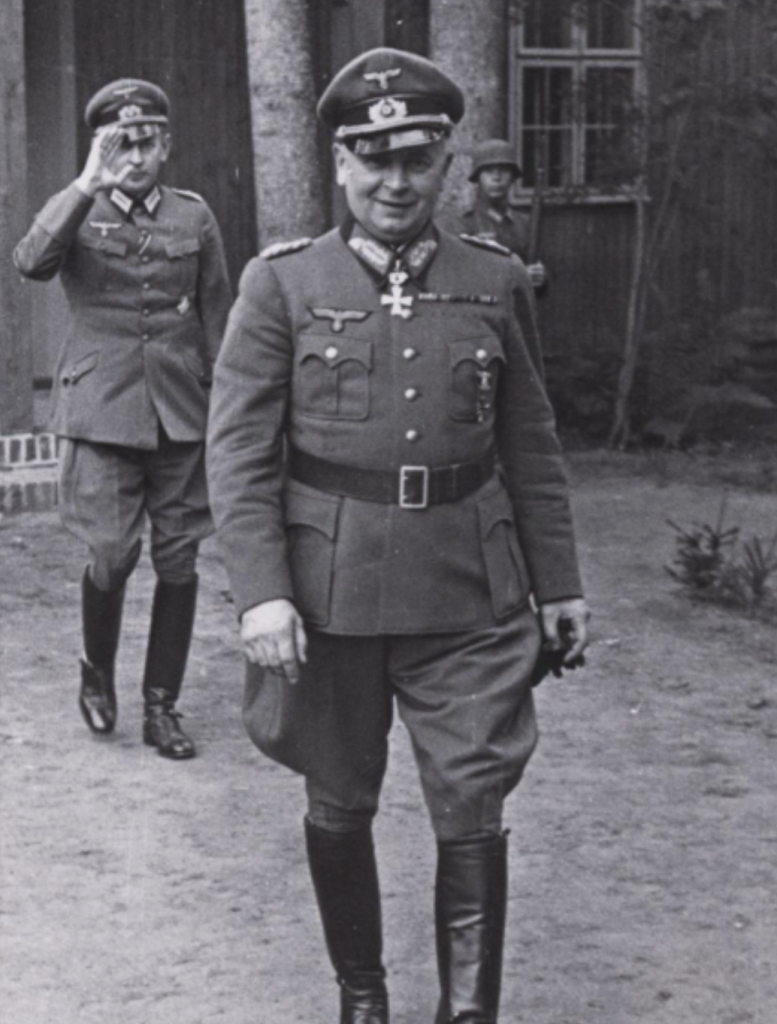
Eduard Wagner
This order was given to all senior commanding officers, including General Erich Hoepner who wrote on May 2nd of 1941 that Germany’s war and mission to exterminate certain peoples was against Jewish Bolshevism:
“The war against Russia is an important chapter in the struggle for existence of the German nation. It is the old battle of the Germanic against the Slav peoples, of the defense of European culture against Moscovite-asiatic inundation, and the repulse of Jewish Bolshevism. The objective of this battle must be the destruction of present-day Russia and it must therefore be conducted with unprecedented severity. Every military action must be guided in planning and execution by an iron will to exterminate the enemy mercilessly and totally. In particular, no adherents of the present Russian-Bolshevik system are to be spared.”
The same order was passed down to Field Marshal von Reichenau and he declared on October 10th of 1941 that the mission was for the destruction of Jewish influence in Europe, which he elided with Bolshevism, and thus German soldiers needed to see themselves as being more than combatants, but fighters for a Social Darwinist cause for Germany, forcing atonement from the “Jewish subhumans” for spreading Bolshevism in Europe:
“The main aim of the campaign against the Jewish-Bolshevist system is the complete destruction of its forces and the extermination of the asiatic influence in the sphere of European culture. As a result, the troops have to take on tasks which go beyond the conventional purely military ones. In the eastern sphere the soldier is not simply a fighter according to the rules of war, but the supporter of a ruthless racial ideology and the avenger of all the bestialities which have been inflicted on the German nation and those ethnic groups related to it. For this reason, the soldiers must show full understanding of the need for the severe but just atonement being required of the Jewish subhumans.”
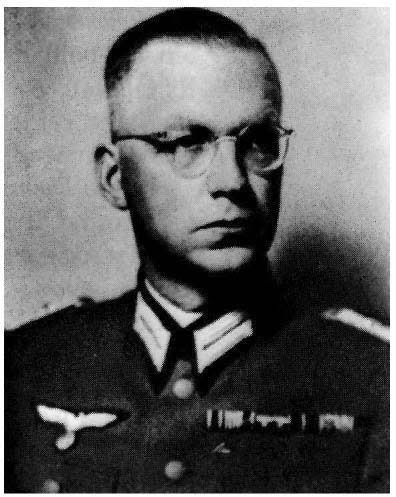
Field Marshal von Reichenau
Field Marshal Erich von Manstein described Jewry as the “the spiritual bearer of the Bolshevist terror” that needed to be destroyed and that Jewry needed to be wiped out to prevent Marxist revolution:
“Since 22 June the German people have been engaged in a life-and-death struggle against the Bolshevist system. This struggle is not being carried on against the Soviet Armed Forces alone in the established form laid down by European rules of warfare. The Jewish-Bolshevist system must be exterminated once and for all. Never again must it encroach upon our European living space. The German soldier has therefore not only the task of crushing the military potential of this system. He comes also as the bearer of a racial concept and as the avenger of all the cruelties’ which have been perpetrated on him and on the German people. The soldier must appreciate the necessity for the harsh punishment of Jewry, the spiritual bearer of the Bolshevist terror. This is also necessary in order to nip in the bud all uprisings which are mostly plotted by Jews.”
General Hermann Hoth, described Germany’s war as against “Jewish-Bolshevik agitators” and the “Jewish class” who spread anti-German sentiments, and thus, as he said, all acolytes of the Jewish-Bolshevik cause and the Jewish class had to be exterminated:
“Every sign of active or passive resistance or any sort of machinations on the part of Jewish-Bolshevik agitators are to be immediately and pitilessly exterminated. … These circles are the intellectual supports of Bolshevism, the bearers of its murderous organization, the helpmates of the partisans. It is the same Jewish class of beings who have done so much damage to our own Fatherland by virtue of their activities against the nation and civilization, and who promote anti-German tendencies throughout the world, and who will be the harbingers of revenge. Their extermination is a dictate of our own survival.” (3)
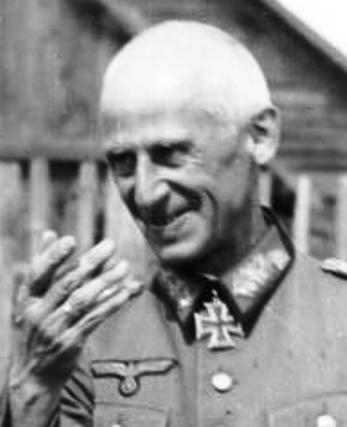
General Hermann Hoth
In a conversation with Josef Goebbels in mid-August of 1941, Hitler lamented that it was a scandal that seventy-eight thousand Jews — “mostly parasites” — continued to live in Berlin and ruin the morale of the city. He described the plan to purge out the Jews as self-defense against Jewish terrorism: “We must approach the problem without any sentimentality. One only has to imagine what the Jews would do to us if they had the power, to know what one must do given that we have the power.” Hitler undoubtedly was thinking of and referring to Bolshevik terrorism, to which Jews were made synonymous. In other words, what Hitler was saying was, ‘If we don’t kill the Jews, they will kill us if they get the upper hand.’
While this was presented as a war against Bolshevism and their partisan anti-fascist resistance fighters who combated German occupation, in Nazi policy Jew was synonymous with Bolshevik and partisan. The high ranking German military leader, Erich von dem Bach-Zelewsky gave this guideline for his men to follow: “Where there is a partisan, there is also a Jew, and where there is a Jew, there is also a partisan.” (4) This eliding of Jewry with Bolshevism was also affirmed by the German General Carl-Heinrich von Stuelpnagel, who on August of 1941 called for “an increased [propaganda] fight against Bolshevism and above all against…Jewry, which works for its objectives.”
Partisan resistance against Nazi occupation was seen as a justification for the mass murder of Jews, even of infants. This was something that was taught directly from Heinrich Himmler himself:
“On 1 September, six SS officers were found in the Weniza forest in the following conditions: they had been stripped of their clothing and hanged with their legs up. Their entrails had been taken out. Such an act demands revenge, and since the Jews did it, we will utterly extirpate them. Even the brood in the cradle must be crushed like a puffed-up toad. We are living in an iron time and have to sweep with iron brooms. Everyone has therefore to do his duty without asking his conscience first.” (5)
When the Soviets were occupying Lithuania in 1940, the Jews were seen with disdain by Lithuanian nationalists for they were seen as having ties with the Bolsheviks. This view was heavily fortified by the fact that Jews owned 57% of the industrial plants and 83% of the businesses nationalized by the Soviet socialists, and that 15.2% of the Lithuanian Communist Party was Jewish. When the Germans took over Lithuania, the nationalist population took the opportunity to hunt the Jews down. In the city of Kaunas, a crowd of Lithuanians gathered together at a petrol station to watch as a robust Lithuanian man beat Jews to death with a crowbar, one after the other. Mothers even held their children aloft so that they could see the bloodbath. The Lithuanian bludgeoner put his crowbar down to stack the bodies on each other and to play the Lithuanian national anthem on a harmonica. When a German officer asked a Lithuanian colleague who had joined the Nazis how he could effortlessly shoot his fellow countryman, he was told: “After what we suffered under the rule of Jewish commissars, after the Russian invasion of Lithuania, it is not so difficult.” 95% of Lithuania’s Jews were slaughtered, or about 140,000 people, and between one-half and two-thirds of them by local Lithuanian nationalist forces. (6)
In Ukraine, when the Second World War broke out, the Communist NKVD unleashed their death squads, slaughtering thousands of prisoners in Dubno, Lutsk, Lviv, Rivne, Sambir, stanyslav and Tarnopol. Even children were nailed onto walls. When Ukrainian nationalists got word of these massacres, they expressed their desire to butcher Jews. Again, we have here an example of how European nationalists pointed to Jewish violence to justify genocide. The Organization of Ukrainian Nationalists (OUN) sent a letter to police headquarters in Lviv: “Long live greater independent Ukraine without Jews, Poles, and Germans. Poles behind the San, Germans to Berlin, Jews to the gallows.” They carried out their desires once the Germans had occupied Ukraine. The horror of the murderousness of the Ukrainian nationalists in Lviv was described in the diary of an SS officer, named Felix Landau:
“There were hundreds of Jews walking along the street with blood pouring down their faces, holes in their heads, their hands broken and their eyes hanging out of their sockets. They were covered in blood. Some were carrying others who had collapsed. We went to the citadel; there we saw things that few people have ever seen. At the entrance to the citadel there were soldiers standing guard. They were holding clubs as thick as a man’s wrist and were lashing out and hitting anyone who crossed their path. The Jews were pouring out of the entrance. There were rows of Jews lying one on top of the other like pigs, whimpering horribly. The Jews kept streaming out of the citadel completely covered in blood.”
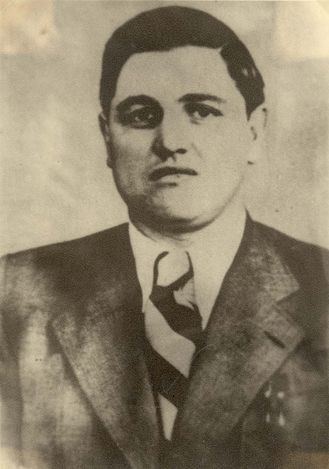
Felix Landau
In the throes of the Second World War, the Ukrainian nationalist paramilitary organization, OUN-B (Organization of Ukrainian Nationalists, with the “B” standing for its leader, the German-backed Stepan Bandera), saw the conflict as their opportunity to murder Jews. In a set of written instructions the group said that the war was an opportunity to kill Jews and associated them with Bolshevism:
“In the time of chaos and confusion it is possible to permit the liquidation of undesirable Polish, Muscovite, and Jewish activists, especially supporters of Bolshevik-Muscovite imperialism. … Destroy the officer staff, shoot the Muscovites, Jews, NKVD men, the political instructors, and all who want war and our death!”
Making Jews synonymous with Communism was deeply rooted in Ukrainian nationalism, and this was a reaction to the heavy presence of Jews in the Bolshevik movement. The foremost scholar on the Holocaust, Omar Bartov, wrote that “In part, the fact that Jews were indeed proportionally overrepresented among the Communists encouraged this view”.
Bandera and his movement, in the name of fighting Communist terror, expressed their desire to unleash their own terror. Bandera’s partner, Yaroslav Stetsko, wrote: “I… support the destruction of the Jews and the expedience of bringing German methods of exterminating Jewry to Ukraine, barring their assimilation and the like.” The OUN-B’s Oleksa Hai-Holovko said: “Jews are very insolent … They have to be treated harshly. We must finish them off. …I like the German view very much.” The OUN-B’s propaganda chief, Stepan Lenkavs’kyi, also called for the destruction of the Jews: “Regarding the Jews, we will adopt any methods that lead to their destruction.”
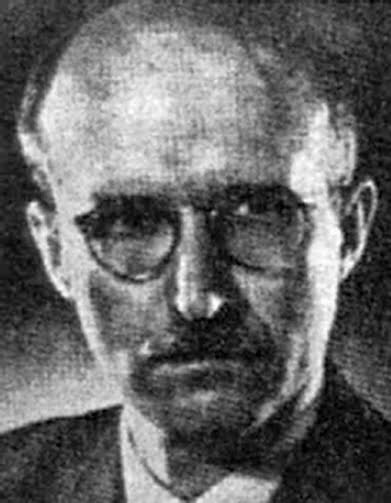
Yaroslav Stetsko
When the Germans sacked the city of Lviv, the OUN passed around pamphlets declaring to the Jews: “You welcomed Stalin with flowers. We will lay your heads at Hitler’s feet as a grave.” In the first two days of July 1941 the Ukrainian nationalists — members of the OUN-B and the Ukrainian Nazi unit, the Nachtigall Battalion — commenced a mass slaughter of the Jews in the name of avenging prisoners murdered by the NKVD. Between seven and eight thousand Jews were beaten, put through humiliation, tortured, raped and murdered. In the whole of the summer season in 1941, (according to historian Per Anders Rudling) the OUN murdered between 13,000-35,000. The historian Alexander Kruglov, estimated that between 38,000-39,000 Jews were butchered in the summer season in massacres across the regions of Galicia and Volhynia. In August 1941, in the region of Kamianets-Podilskyi, in Khmelnytskyi Oblast, members of the SS alongside their Ukrainian proxies, rounded up and murdered 23,600 Jews. Only a few weeks later, in September, German Nazis and Ukrainian nationalists (members of the OUN) butchered over 33,000 Jews in only two days at the Babi Bar ravine outside of Kiev. After doing massive butchery in 1944, it is estimated that the OUN-UPA murdered 100,000 civilians, and assisted in the slaughter of hundreds of thousands more. Historian Yehuda Bauer wrote that the Banderites “killed all the Jews they could find”. This isn’t surprising when one reads the OUN slogan:
“We slaughtered the Jews, we’ll slaughter the Poles, old and young, everyone; we’ll slaughter the Poles, we’ll build Ukraine”
The OUN would chant as they marched: “Death, death, death to the Poles/Death to the Moscow-Jewish commune/The OUN leads us into bloody battle”. The historian Timothy Snyder (who today is very sympathetic towards Ukraine) wrote that the UPA murdered tens of thousands of people, “most of them women and children”. Moshe Maltz, a Jew who hid underground in Sokal from the Ukrainian nationalists, wrote in his diary at that time: “Bandera men… are not discriminating about who they kill; they are gunning down the populations of entire villages. … Since there are hardly any Jews left to kill the Bandera gangs have turned on Poles. They are literally hacking Poles to pieces. Every day… you can see the bodies of the Poles, with wires around their necks, floating down the river Bug.” The murderousness of the Ukrainians was done under the facade of fighting Communism. In 1943, under Nazi tutelage, Stepan Bandera took part in a conference that was convened to put together an “anti-Bolshevik front”. (7)
It is a disturbing reality that mass murderers do not call for bloodshed in the name of a pure fantasy pulled out of nowhere; for if this were the case, nobody would follow them and they would be seen as mad. Rather, they pursue their bloodlust in the name of fighting real dangers, and for this reason, the masses follow them. The Nazis and their acolytes pointed to facts, such as that Marxism was a destructive ideology, and they of course pointed to its Jewish roots. Marxism, as everyone knows, was created by a Jew name Karl Marx. He was not a man of peace, but openly called for mass violence and thievery. He wanted for the working class to become the ruling class, and this ruling class would then rob and keep all of the property:
“The proletariat will use its political supremacy to wrest, by degrees, all capital from the bourgeoisie, to centralize all instruments of production in the hands of the State, i.e., of the proletariat organized as the ruling class; and to increase the total of productive forces as rapidly as possible.”
Bolshevism was a violent ideology, that desired to spread through bloodshed and force, and to impose itself through murder and despotism. The Nazis knew this, and talked much about it, and of course they associated this threat with the Jews. In the Nazi children’s book, Der Giftpilz (the Poisonous Mushroom), it speaks of “the Jews and their horrific crimes.” (8) What crimes? In the beginning of the book it describes how a worker named “Harttman” becomes a Communist and attends Marxist meetings only to notice that its leaders are Jews who praise Russia and do not care at all about Germany. The association between the Jews and Communism is firmly made in this excerpt:
“And as one of the Jews was always talking about Russia and always saying it was best there, I grew angry and interrupted: Why are you always talking about Russia? We are German workers! Yes, we’re Germans. We want to hear something about Germany, not Russia! He goes on to tell how the speaker grew fearfully angry and finally called out: What do we care about Germany? All that matters is that we get on and have a good time! Now I knew enough. We workers should become traitors to the Fatherland. We should cooperate with the Jews for the ruin of Germany. I would not be a traitor to the Fatherland. No, never! I turned my back on the Jews and left the meeting. Three others came with me. That night I could not sleep. But then I knew what to do. I left the communist party. Later, I found my way to Adolf Hitler. And I say to you: I shall stay with Hitler as long as I live. I knew the Jews. I shall always think of the song that we workers sung:
“If a folk wants to be powerful It must hold firmly together.
For strikes and upsets and the class struggle Are the ruin of a folk.
This the world has been taught often enough
Throughout the centuries.
Eternal peace will only come
When we have been freed from the Jews.”
Here, the Communist movement is described as being riddled with Jews; the Jews are described as caring not for Germany but a foreign land; and it is affirmed that if Germany is to be strong, the Jews must be stripped of their influence which is referred to as bringing about “strikes and upsets and the class struggle,” that is, Marxism. Also, notice how the Jew is seen as loyal to another country and not his host nation, echoing today’s growing sentiment that Jews are more loyal to Israel than to the countries they live in.
Part 5
Bolshevik Jewish Violence Was Used To Promote Nazism
In the history of the hatred against Jews in Germany, we must first establish that the Germans were not hating Jews right at the end of World War One, which is a common misconception. This antagonism did not come out of nowhere, but was a reaction to real events. Michael Burleigh, a foremost historian on the Third Reich, wrote: “Beyond bigots, who exists in all times and places, most Germans did not spend their waking hours thinking about Jews, although the impression is inadvertently conveyed by a vast scholarly literature focused exclusively on relations between Germans and Jews. People had to be encouraged to think about Jews at all. Most Germans were probably much more exercised by issues of class and religion than by less than 1 per cent of their population.” (9)
When the Jewish industrialist and Foreign Minister, Walter Rathenau, was murdered by German nationalists in 1922, his death was not met with praise, but outrage by millions of Germans who took to the streets in mass demonstrations to protest against right-wing violence. To appease these angry masses, the government passed a law in July of 1922 called “the Protection of the Republic” which prescribed harsher punishment for political violence (unfortunately this did not stop the rise of Hitler). So this poses the question: how did Germany go from millions protesting against right-wing violence on Jews, to worshipping Hitler?
The fear of Communism taking over Germany was not something that came out of nowhere. Rather, it was a fear based on reality, and something that would be used by the Nazis to justify their own ideology. While the Nazis were indeed evil and murderous, they pointed their fingers to the evils of the Communists to present themselves as the solution to Marxist violence. This obviously appealed to people, and it would be impossible that their love for Hitler and the Nazis as their saviors came from something solely of their own imaginations. The massive support for the Nazis had a basis in reality, and to a great extent it was a response to very real problems such as Marxist or Bolshevik violence. There were Communist terrorist organizations that were directly tied to the Comintern Executive in Moscow which envisaged Germany becoming a Communist country and part of the Marxist world order. There was the Red Front Fighters’ League which was banned by the German government in 1929 but continued its operations underground; there was also the Fighting League Against Fascism formed in 1930, and the Proletarian Self-Defense Force. There was also the “Anti-Military Apparatus” which set up its base in the Liebknecht-House, the Communist headquarters in Berlin.
This group was set up in 1923 at the behest of the Second World Congress of the Communist International in 1920 in Moscow. The intention of this conference was to spread Communist revolution in Europe, hence why it called “for the preparation of armed uprisings.” This, of course, included Germany. This was in line with the vision of Stalin who, in the late 1920s, believed that Germany was on the brink of revolution. Communist terrorist groups began preparing maps of army bases and police stations with the intention of attacking them. The police tried to impose order in Communist dominated enclaves in Berlin, but were met with extreme violence by rooftop snipers. Regular cops were many times murdered by Communist terrorists. For example, in 1931, three police officers in Berlin were murdered outside the Babylon cinema. The killings were planned out by the KPD (German Communist Party) (10) which had direct ties to the Comintern in Moscow. The murderers were the Jewish Marxist Heinz Neumann and his fellow Communist, Hans Kippenberger. This terrorism done by Jews was most definitely capitalized upon by the Nazi Party. In 1935, Joseph Goebbels wrote of these murders as examples of Jewish violence on the German people:
“On the 9th of August 1931, the police captains, Anlauf and Lenck, were shot down in the Bülowplatz in Berlin. The Communist leaders, Heinz Neumann and Kippenberger, were accused as instigators of the murder. Shortly afterwards Heinz Neumann was arrested in Switzerland because of a passport which was invalid and a request for extradition made by Germany was not granted, on the plea that it was a “political crime.” These are only some single examples of the communist terror wreaked on individuals.”
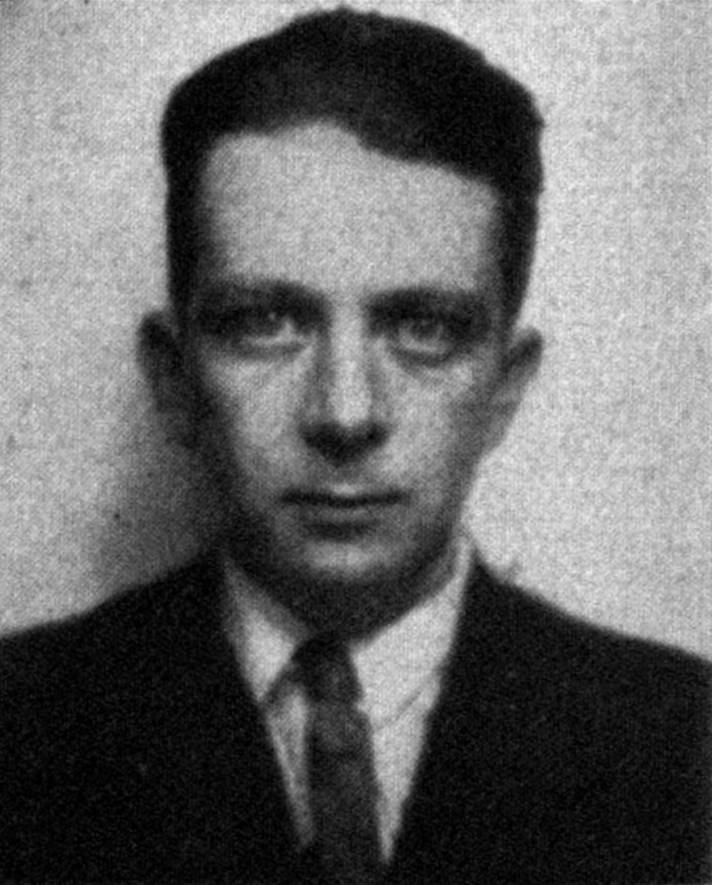
Heinz Neumann
The Nazis would have definitely pointed out that this violence was rooted in the teachings of the Jew Karl Marx who did not call for change through peaceful means, but for his goals to be met through tyranny. In Marx’s own words:
“Of course, in the beginning, this cannot be effected except by means of despotic inroads on the rights of property, and on the conditions of bourgeois production”
Looking from afar, Germans and other Western Europeans saw how Marxists ravished Eastern Europe, and now they saw how the Marxists were entering their countries and wreaking havoc. This is where the Nazis and other nationalists came to present themselves as the solution to this real problem. And it was, indeed, a problem.
PART 6
THE STARVATION OF MILLIONS BY JEWISH BOLSHEVIKS AND HOW IT WAS USED BY THE NAZIS FOR PROPAGANDA PURPOSES
Marxism can be summed up into one line: ‘private property is bad.’ Marx himself wrote that “the theory of the Communists may be summed up in the single sentence: Abolition of private property.” The Marxists wanted to rob and kill and nothing more. Marx made his desire to plunder very clear: “[Y]ou reproach us with intending to do away with your property. Precisely so: that is just what we intend.” Marx deems as naive socialists who “wish to attain their ends by peaceful means” that he says are “necessarily doomed to failure.”
And this is what the Bolsheviks did. They seized the farms of private landowners and forced them to become collective farms. The Communists wanted to exterminate a class of people known as the Kulaks, who were small landowners. The Kulaks made up only between 3 and 5 percent of all peasant farmers and yet they produced a fifth of all grain production. But the Bolsheviks wanted to annihilate them. Their crime? They owned property. Hundreds of thousands of Kulaks were murdered and millions were exiled. The end result was that (in the words of Welsh journalist Gareth Jones who was in the Soviet Union during collectivization of the farmlands) “six or seven millions of the best farmers (i.e., the Kulaks) in Russia have been uprooted and have been exiled”. Purging out the best farmers meant poorer crops, which spelled famine. The Communists orchestrated the policy of “dekulakization,” a genocide based on class, which went from 1929 to 1933. It was commenced in 1928 when the Politburo unanimously declared an “emergency” and the right to seize all grain from the Kulaks in order to feed the populations in the urban zones. When not enough grain was gained from robbing the Kulaks, the Communist government simply began robbing poorer peasants (“sub-Kulaks”). Any peasants who owned property were seen as the “the capitalists of the village,” reported Gareth Jones.
The Communist state did exactly what Marx wanted: they stole the properties, the animals, the food, and people were left to starve to death. Those who resisted were exiled or shot. Gareth Jones took a tour through the USSR and wrote about the starvation that he saw. In October of 1932 he quoted what a peasant told him: “It’s a dog’s life now, ever since they’ve forced us into collective farms. 1926 and 1927 were fine years when we still had our own land. But it will be better to be under the earth than live now. … Land, cow and bread they’ve taken away from us. Nearly all our grain — and it was little enough — has been carted away and sent to the towns and we’re afraid to speak. What will we do during the winter?” Jones recalled: “This is what I heard from the mouths of peasants in many parts of Russia. ‘Why should we work?’ they asked, ‘When our land and cow have been taken away from us.’” (11)
This policy (known as the “Five-year Plan”) went on for years, leading to the starvation of millions of people. One’s food was state property. Government officers patrolled the lands, seizing even the smallest amount of grain from starving peasants. In March of 1933, Gareth Jones wrote: “The main result of the Five-Year Plan has been the tragic ruin of Russian agriculture. This ruin I saw in its grim reality.” He also wrote: “I tramped through a number of villages in the snow of March. I saw children with swollen bellies.” He observed how widespread the famine was: “But today the famine is everywhere, in the formerly rich Ukraine, in Russia, in Central Asia, in North Caucasia — everywhere.” He further wrote: “The Five-year Plan has built many fine factories. But it is bread that makes factory wheels go round, and the Five-year Plan has destroyed the bread-supplier of Russia.”
The Soviet memoirist, Yurij Yelagin, recounted the horrors he witnessed:
“At each town along the way, we saw hundreds and thousands of starving peasants at the station – with their last ounce of strength they had come from their villages in search of a piece of stale bread. They sat against the station walls in long dreary rows, sleeping, dying, and every morning the station guard would have the corpses removed on wagons covered with canvas.”
When one saw a black flag hovering over a town, it meant that its inhabitants were all dead and disease had riddled it. Such black flags were commonly spotted and recounted of in harrowing testimonies such as that of Oksana Solovei who would later recall:
“In the late fall of 1932, my good friend Tetiana stepped off a train at the Dolyns’ka station, thirty five miles northwest of Kryvyi Rih. She had to get to a distant collective farm, where a relative of hers worked. No trucks passed on the way. At long last, a tractor driver pulled up and agreed to take her at least part of the way. They approached a large village, or town, of about three thousand inhabitants. Already in the town they noticed that a black flag was flying in the commonage near the main entrance way. In every house they passed, the windows and doors were boarded up. Deathly silence reigned all around. Briars and weeds stood head high. The town had died to a man.”
Life on “the collective” farmlands of the Bolsheviks was hell on earth, with Bolsheviks coming to people’s homes and seizing anything edible. As Solvei recounted:
“I remember the time they arrived for the cow. A man with a rifle was screaming at my mother: “Hand over the cow” My mother was screaming back, just as loudly: “You kill me first, I won’t give you the cow, it’s keeping my children alive”. We children stood around my mother and cried. The cow was in its pen and the iron ring was hooked in the door. We had already not brought the cow outside for a number of days, tearing grass and bringing it for her to eat, because we were afraid of having her seized. The man went away, but he threatened my mother. I do not remember when it was that they took the cow, but take it they did. I remember how they came and took everything edible. They climbed up the attic, the shed, the cellar. I know that my mother went to the collective farm to work and came home with some sort of thin soup. This was the fall of 1932, and the worst had yet to come.”
People tried to flee, but would be gunned down by the Bolsheviks: “On 28 July 1932, the residents of Volovoda on the Bessarabian bank of the Dnister river witnessed how the Bolshevik border guard sank a boat with five people fleeing aboard.”
These were the horrors of Communism, and who was a major driving force behind Soviet collectivization? It was a Jew named Lazar Kaganovich. In the summer of 1930, when Kaganovich was told that Lenin’s widow, Nadezhda Krupskaya, was giving a speech in Moscow criticizing collectivization, he rushed to the meeting and berated her with “coarse and scathing abuse.” When the Ukrainian Politburo begged for a lowering down of the amount of grain required from peasants, Kaganovich, alongside Vyacheslav Molotov, “categorically refused”. They later sent the Ukrainian party leaders a secret telegram demanding for them to get the peasant farmers to produce more grain, and to punish them with harsh penalties if they failed to comply. In December of 1932, when Kaganovich was in Kharkiv, the Ukrainians there begged him to allow peasants to keep some grain to eat and seeds for the next years sowing. Kaganovich denied them this request, and even messaged Stalin that they were “seriously hampering and undermining the entire grain procurement.”
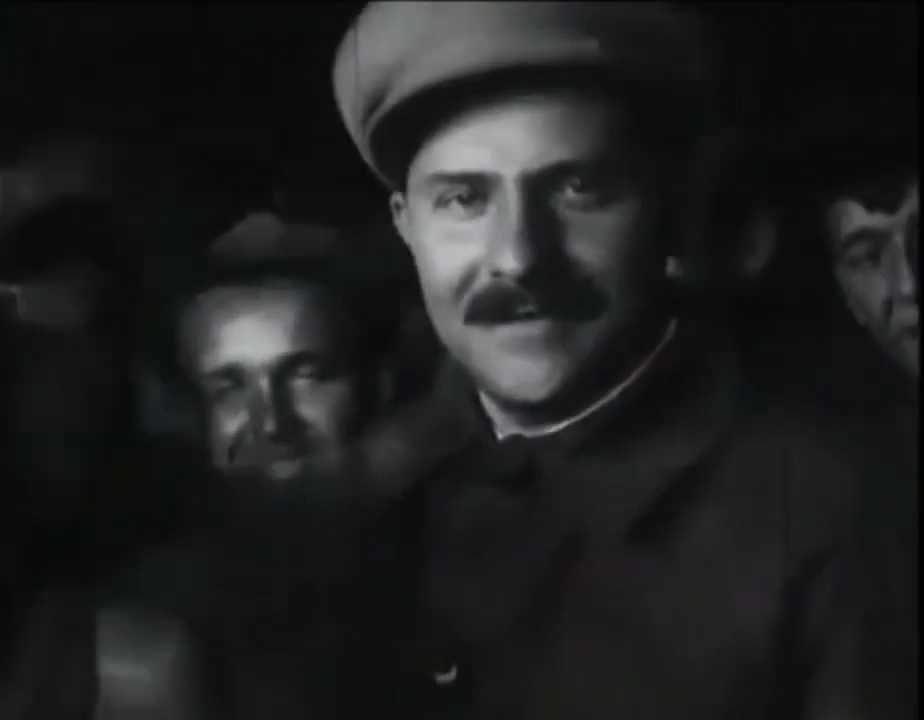
Lazar Kaganovich
While Russia and Ukraine starved under the reign of terror of the Jewish Bolsheviks, the Nazis were watching, and they were pointing to it to make the Jews look evil, and to justify their own despotic ideology. In 1935, Joseph Goebbels wrote: “And where it [Bolshevism] has had the opportunity of practising its theories it has created ‘The Paradise of the Workers and Peasants’, in the shape of a fearful desert of starving and hungering people. … This is shown in the millions of sacrifices which have been made in honour of it, through executions with the sword, the axe or the hangman’s rope or hunger.” Goebbels brings up the starvation and names its orchestrators as being mostly Jews:
“Millions of workers on hunger-wages such as are not thought of in western Europe, millions of afflicted and sorrowing peasants who have been robbed of their land, which is being completely ruined by the stupid experiment of a paralysing collectivism, famine which claims millions of victims year after year in a country of such vast extent that it might serve as a granary for the whole of Europe, the formation and equipping of an army which, according to the claims of all leading Bolshevists, is to be used for carrying out the world revolution, the brutal and merciless domination of this madly-led apparatus of State and Party at the hands of a small terrorist minority which is mostly Jewish”.
The Nazis were pointing to facts: The Jewish Bolsheviks were mass murderers. But they did this in order to justify their own evils, their own bloodlust.
Kaganovich went to the Northern Caucasus in October of 1932 to “struggle with the class enemy who sabotaged the grain collection and sowing.” When he received resistance from local Cossacks, he had the entire population of sixteen Cossack villages — over a thousand people — deported and replaced with peasants from less fertile lands.
While he was minister for the railways, Kaganovich led the “purge” of railway workers accused of sabotage and being foreign spies. Kaganovich partook in the murder of 36,000 people by signing death lists. He murdered so many railwaymen that one official called to warn that one line was totally unmanned.
PART 7
THE MASSACRE OF CHRISTIANS BY THE JEWISH BOLSHEVIKS
Having that same antichrist spirit that called for Christ’s crucifixion, Kaganovich was bent on destroying Christianity. He supervised destruction of many of the city’s oldest monuments, including the Cathedral of Christ the Saviour. Kaganovich stood on top of the cathedral’s rubble and proclaimed: “Mother Russia is cast down. We have ripped away her skirts.” This was of the spirit of the Jew, Karl Marx, who called for the toppling of the entire social order of society, or as he wrote: “In short, the Communists everywhere support every revolutionary movement against the existing social and political order of things.” Hence why the Communists wanted to overthrow the Church, which was at the foundation of the social order of Russia. Under the reign of these Jewish atheists, to critique atheism was prohibited by law.
So much for all of the atheists who pose themselves as guardians of tolerance and freedom. One of the heads of Bolshevik atheism was Minei Izrailevich Gubelman (who went by Yemelyan Yaroslavsky) a Jewish atheist and the editor for the magazine Bezbozhnik (The Godless) and the leader of the organization, the League of Militant Atheism. Izrailevich envisioned that religion would die under Communism. The motto of the League of Militant Atheism was “The struggle against religion is a struggle for socialism”. One of the activities of the League of Militant Atheism was to transform Orthodox churches and monasteries into “museums of atheism.”
The League would work with the Communist Party and the Communist Youth League (Kosomol) to organize mock Christmas and Easter festivals that were designed to ridicule these very holidays. The result of this militant atheism was, of course, mass murder. In 1922, Lenin sent a secret memo to the Politburo demanding a “ruthless battle” against the Orthodox clergy. He ordered for the seizure of church property “with the wildest and most merciless energy,” adding: “The greater number of representatives of the reactionary clergy . . . we manage to shoot on this basis [refusing to hand over valuables], the better.” Tens of thousands of clergy members were arrested, murdered or exiled off to gulags. A secret 1930 police report put the number of Orthodox clergy who had died in prison camps at 42,800. By 1940, of the fifty-thousand churches and chapels that were in Russia prior to the Bolshevik Revolution, only a few hundred were still in operation. The antichrist spirit of the Bolsheviks was made explicitly clear by the fact that the day after the Bolsheviks took power, they passed their “Decree on Land,” which allowed the state to seize all church property on October 26th, 1917. The next month, church weddings were announce to be invalid, alongside the registration of births and funerals. In January of 1918, Christianity was prohibited from being taught in schools and the government cut ties with the Church. In that same month, Patriarch Tikhon declared that the Bolsheviks were anathema:
“Recover your senses, madmen. Bring an end to your bloody strife. You are not merely committing the deeds of Satan, which are condemning you to Gehenna in the next world, and leave a dreadful curse upon your descendants in the present one.”
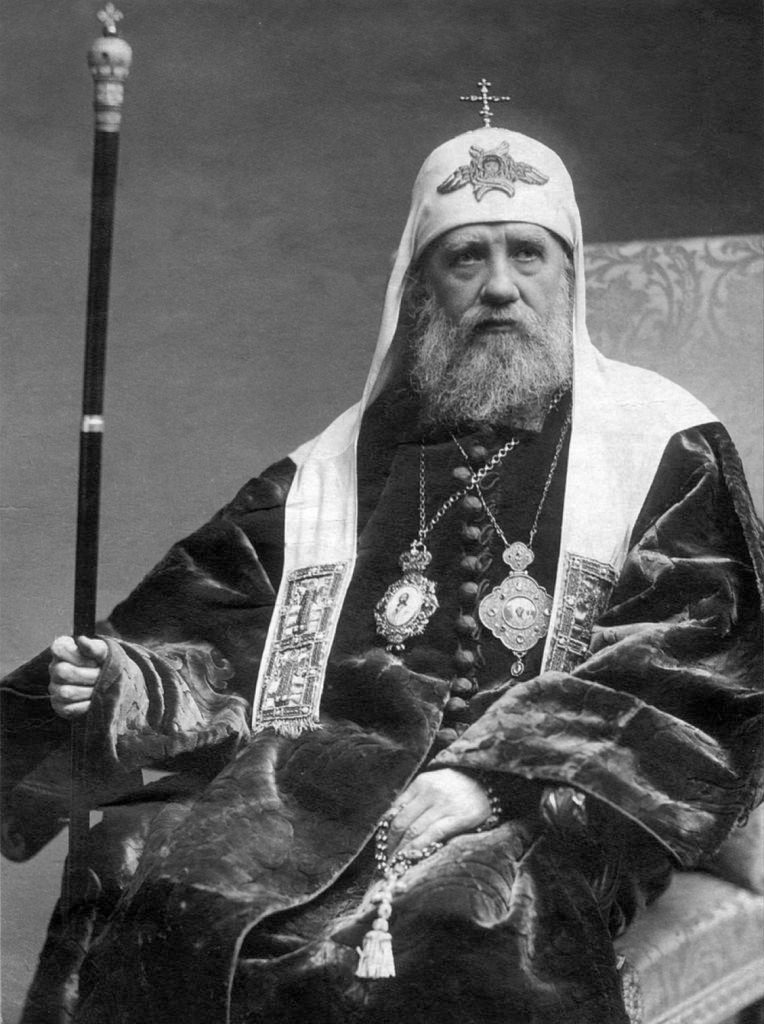
Patriarch Tikhon
Tikhon further declared: “keep away from such monsters…The enemies of the church are trying to gain power over it and seize its property by the force of guns: resist them with the strength of your faith and join your voices in a powerful clamor of protest.” The Bolsheviks had Tikhon placed under house arrest and intensified their persecution of Christians. The Russian Church historian, Metropolitan Hilarion described the horrors: “Clergymen were murdered with particular brutality. They were buried alive, had cold water poured over them in sub-zero temperatures until they froze, were placed in boiling water, crucified, whipped to death and chopped with axes. Many were tortured before their deaths, or murdered along with their families or in the presence of their wives and children.”
The first hierarch martyr of the Bolshevik antichrist terror was Metropolitan Vladimir of Kiev. On January 21st, 1918, Ukrainian nationalists (desiring to have their own national church independent of the Moscow Patriarchate) told the Bolsheviks the location where Metropolitan Valdimir was residing. The Bolsheviks entered his cell in the Kiev Pechersk Lavra and attacked him. Around Vladimir’s neck was an icon of the Virgin Mary (the Panagia); the Bolsheviks ripped it out and began choking him with the chain of the necklace. Twenty-minutes later they led him into the freezing cold outside. “May the Lord forgive you.” These were his words before his martyrdom. On his corpse was found bullet wound and sword lacerations.
People saw the destruction Bolshevism caused, and easily held to antisemitic fury. It was this fury that provided the groundswell in which Hitler was viewed as a hero against Marxist terror. In comparison, looking at the destruction of Gaza and the persecution of Christians by Israel, there is a growing number of people who want to see the destruction of the Jewish state.
PART 8
NAZISM AS A RIGHT-WING BACKLASH TO LEFT-WING POLICIES
Antisemitism was showing itself in Germany when Hitler was still within the realm of obscurity. “Antisemitism, with all its well-known signs,” wrote the German-Jewish high-school teacher Dr. Heinemann Stern who lived at that time, “fully showed itself at a time when Hitler and his movement were still the object of curiosity or of casual jokes.” The Nazi Party did not explode in popularity immediately after World War One. Its popularity was due to a buildup in Right-wing nationalism as a backlash to left-wing causes. The idea that the Nazis and far-right ideology received the praise and reverence of the German people solely because of World War One falls flat on its face when you look at the fact that the dominating party right after the Great War was the German Social Democratic Party (SPD) which was a moderately left-wing party that would go on to be the largest faction in the government for the first thirteen years of the Weimar Republic. The shift from left-wing to right-wing politics could be seen, for example, in the elections for the city of Breslau. In the 1919 election, 51.19% of Breslau’s inhabitants voted for the left-wing SPD; and in 1933 — 14 years later — 51.7% of this same city voted for the Nazi Party.
It was not as if these people just immediately, after World War One, started hating Jews. There was a process — a buildup — and like water in a pot on a hot stove, it began to simmer, and even if a lid was placed on top of it, the rolling boil would topple the lid.
The Nazi and nationalist boom was an eventual reaction to Marxist and Left-wing actions. The left-wing in Germany was trying to destroy the traditions of Christian values. For example, just weeks after the Kaiser Wilhelm II abdicated his throne, the Prussian Ministers of Education, Konrad Haenisch and Adolf Hoffman, both social democrats, decreed:
“The emancipation of the schools from all ecclesiastical patronage; the separation of church and state; the children of dissenters and of people of officially unrecognized faiths for whom no religious instruction has been provided in the existing scheme of education are on the motion of the educational authorities to be released from religious instructions without further ceremony.”
Prayer was banned from schools:
“Prayer in the school before and after religious instruction is to be omitted. …School celebrations must have no religious character. The study of religion is not a subject on which examinations are to be required.”
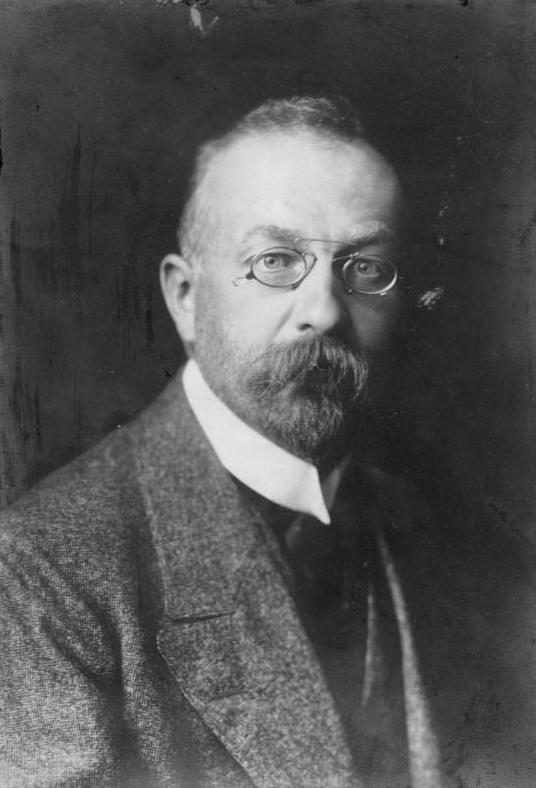
Konrad Haenisch
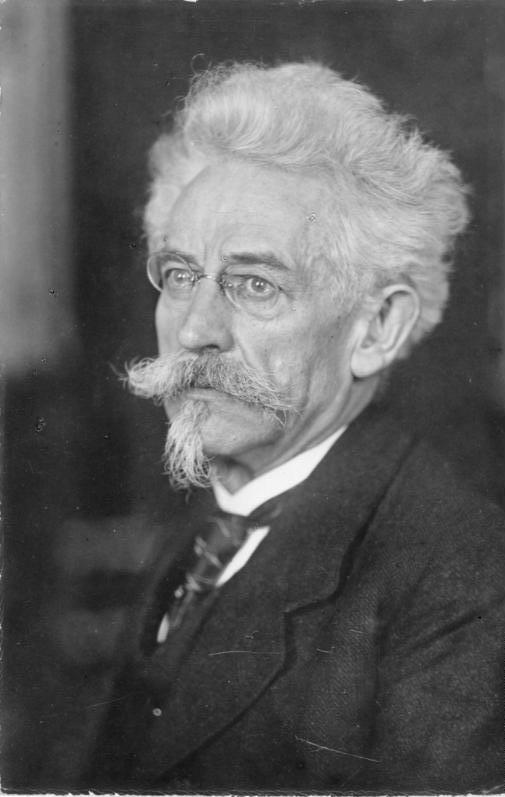
Adolf Hoffman
Similarly aggressive decrees were made against Christian schools in Hamburg, Brunswick and Saxony. In our time, there was the immense backlash against “woke” policies and marketing, so in those days in Germany the liberal, anti-Christian policies got tremendous backlash. As the theologian Martin Rade, writing in those days, said: “Agitation on the part of the conservative press, conservative pastors, and other ecclesiastical personages completely dominated the matter.” Fruit was born from the anger. On January 6th, 1919, Adolph Hoffmann resigned from his office, and Konrad Haenisch did not push any further Hoffman’s anti-Christian agenda, not desiring the confrontation. Germany was in the midst of a right-wing backlash against left-wing policymakers. Thus, Nazism’s rise was amidst the throes of a right-wing backlash against left-wing policies, and its clear that it was an extreme escalation of that backlash. So today the West is in the midst of a right-wing backlash against the “woke left”, and this will eventually lead to the rise of future hitlers. In the 1920s, years before Hitler became the chancellor, Germany was riddled with liberals and conservatives — much like our own times — and it had liberal and conservative politicians ruling it. Against the rise of antisemitism in those days, these politicians would express their disapproval, just as today you have politicians who speak out against anti-Jewish or anti-Israel sentiment.
In his documented conversation with Hitler in 1923, Dietrich Eckart records Hitler telling him about how mainstream politicians would try to counter antisemitism by saying that people always blame the Jews wrongfully, and that the Jews are hated out of jealously of their financial success. Hitler sites mainstream politicians, Chancellor Wilhelm Cuno, the Bavarian Minister of the Interior Franz Xaver Schweyer, who was a conservative Catholic, and Georg Heim, who cofounded the conservative Catholic Bavarian People’s Party, and states that these politicians would defend the Jews with such arguments:
“now the people will seek to Dr. Cuno, and Dr. Schweyer, and Dr. Heim, and whatever other charmers and wizards they have. When asked why Germany has become a pigsty these gentlemen will answer reproachfully, ‘You yourselves are to blame. You have no more good breeding, no faith, only selfishness and conceit. Now you will try to put the blame on the Jews. It’s always been like that when you have needed a scapegoat. Then everyone has jumped on the Jews and persecuted them unmercifully. And just because they had the money, and because they were defenseless. Is it any wonder that a few individual Jews are behaving in a reprehensible manner now? After all, one finds some black sheep in every group. As if there weren’t a good number of decent Jews!”
That Hitler complained about the “not all Jews” argument shows that years before he took power, there was a stigma against antisemitism that was eventually overridden, just as Belloc documented.
PART 9
MARXIST TERRORISM AND THE FAR-RIGHT RESPONSE
What is almost never talked about is that before the rise of Hitler, Germany had a serious problem with Marxist terrorism within its borders. In the winter of 1918 and 1919 there was a Marxist movement that called itself the Spartacists which coalesced with other Left-wingers and even conspired with Bolsheviks directly tied to Vladimir Lenin. The mission of the Spartacists was to overthrow the Weimar government and make Germany into a Marxist country. Spartacists established ties to Left-wing groups based in Bremen and Hamburg and together founded the Communist Party of Germany (KPD). They consisted of fanatical Marxists who were against parliamentary democracy and desired putschist violence. In 1912, a Jew by the name of Karl Radek, an agent for the Comintern of Vladimir Lenin (also a Jew) travelled from Poland to Germany on the invitation of August Thalheimer, a German Jewish Marxist. After the outbreak of World War One, Radek went to Switzerland where he worked as a liaison between Lenin and the Leftists in Bremen. It was here where he made ties with Paul Levi, a German Jewish communist. While he was in Germany, Radek was a member of a Marxist group called “Zhaddovites”, which was founded by Yakov Hanecki, whose real name was Jakub Furstenberg, a Polish Jew who was also an agent for Vladimir Lenin. After the Bolshevik Revolution in 1917, Radek went to Russia where he became Vice-Commissar for Foreign Affairs. In 1918, Radek travelled back to Germany alongside other Communists, including Adolf Abramovich Joffe, who was of a Karaite Jewish family. They had plans to attend the German Congress of Soviets to continue the Bolshevik revolution in Germany. But, they were stopped at the border and turned back. Radek was adamant about the Marxist cause and ended up illegally crossing the border into Germany where he partook in conferences and discussions which led to the founding of the Communist Party of Germany.
1919 saw the rise of the Spartacist movement, which began during World War One. Their goal was to do a Bolshevik revolution in Germany, and to do to Germany exactly what the Bolsheviks did to Russia. They wanted to overthrow the central government, and break Germany down into a body of soviet socialist states. The leaders of the Spartacists wrote a series of pamphlets they were trying to go viral in Germany, with the mission of a Bolshevik takeover of the country. Part of their strategy was to sever German social democracy from Communism and make the latter the dominating ideology of the land. Amongst the authors of these pamphlets were Leo Jogiches, Paul Levi, Karl Liebknecht, Rosa Luxembourg, Franz Mehring, and Clara Zetkin. Of these, three were Jewish: Jogiches, Levi and Luxembourg. The latter of the three was the major mind of the Spartacist movement, endlessly working to bring to fruition her utopian dream of Communism taking over Europe.
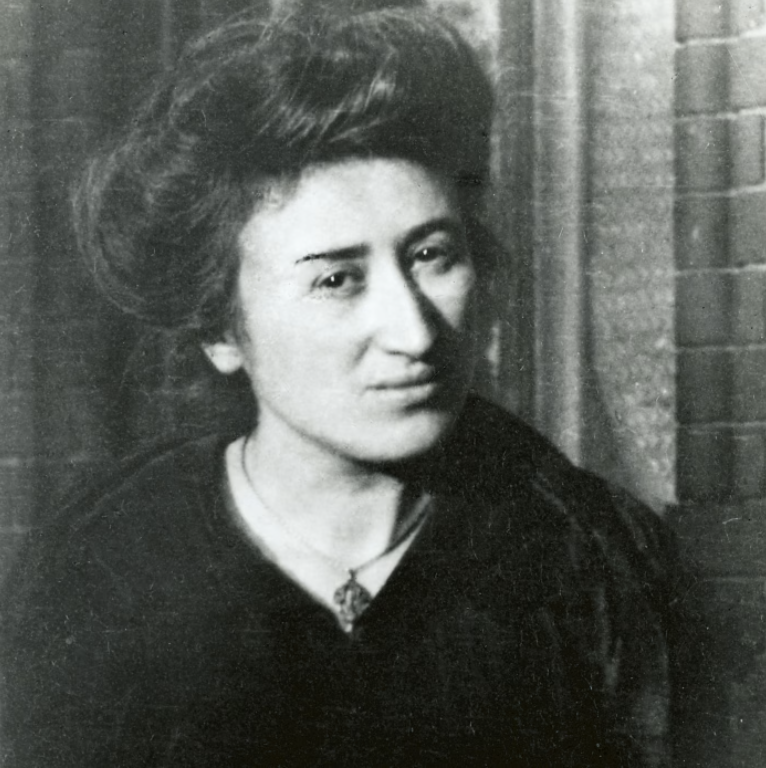
Rosa Luxembourg
In 1905, Luxembourg travelled to Poland — which was then under the Russian empire — where she dived deeply into the revolutionary fervor which was so intense at that time, writing articles pushing for her revolutionary marxist cause. She was eventually arrested in 1906 and put in jail for four months. After she was released from jail she was not allowed to leave Warsaw, but eventually escaped to Finland where she met with Vladimir Lenin and his immediate Bolshevik circle.
Her experience in the 1905 Russian Revolution, and her subsequent discussions with Lenin and his ilk, inspired her to write the very influential pamphlet, The Mass Strike, the Political Party and the Trade Unions, in which she argued that spontaneous action can greatly help a revolutionary cause as opposed to being fixated on being organized and totally strategic. She took her experience from her revolutionary action against Russia and wanted to apply it to Germany. The strategy of the German Bolsheviks was to use the crisis that would come about from war to advance the Bolshevik cause. This was demonstrated in the 1907 International congress in Stuttgart, wherein Vladimir Lenin, Luxemburg and Julius Martov (another Jew whose grandfather, Alexander Tsederbaum, was part of the Haskalah or “Jewish Enlightenment”) drafted a declaration committing themselves to use any upheavals as a result of war to “hasten the abolition of capitalist class rule”.
Julius Martov
This was the strategy that they utilized after the First World War. The Kaiser Wilhelm II abdicated the throne, thus leaving a power vacuum. A Spartacist leader by the name of Karl Liebknecht was so enflamed by radical enthusiasm that he wrote to Vladimir Lenin:
“The revolution of the German proletariat has begun. This revolution will save the Russian revolution from all attack and will sweep away all the foundations of the imperialist world.”
As a reaction to the Social Democratic government removing Emil Einhorn from his position as police chief, and his refusal to leave this position on January 4th of 1919, Liebknecht, Luxembourg, Jogiches, Levi, Zetkin, and radical trade union representatives convened a meeting and agreed that “the revolution was at stake” and called for a massive demonstration against what they called the Social Democrat’s collusion with “reactionaries” and “class enemies”.
Two-hundred thousand demonstrators — some of whom were armed — answered the call. Such a massive number even surprised the Sparacists, who were used to small groups gathering for their cause. This roaring wave of angry protestors gave Luxembourg and her gang a sense of elated confidence that now was their moment to spark revolution.
Another Jewish Bolshevik who was in Germany at that time, Rosa Levine-Meyer, was part of the zeal for revolution and wrote:
“The response of the workers, right down to those of the SPD, was overwhelming and the government was entirely helpless.”
Liebknecht had a great feeling of assurance that this was the moment to hit the metal when it was hot and call for a revolution. Luxemborg advised against it, arguing that the Spartacist movement did not have enough numbers of people who were willing to take arms against the government. Nonetheless, Libebknecht, Jogiches, Luxemborg and the others fully committed themselves to the idea of revolution, and a call was made by them to overthrow the state, with the full knowledge and support of Lenin’s agent, Karl Radek. Only 10,000 people answered the call for violent revolution, and most of them fled once reality sunk in that they did not have the manpower to do their mission.
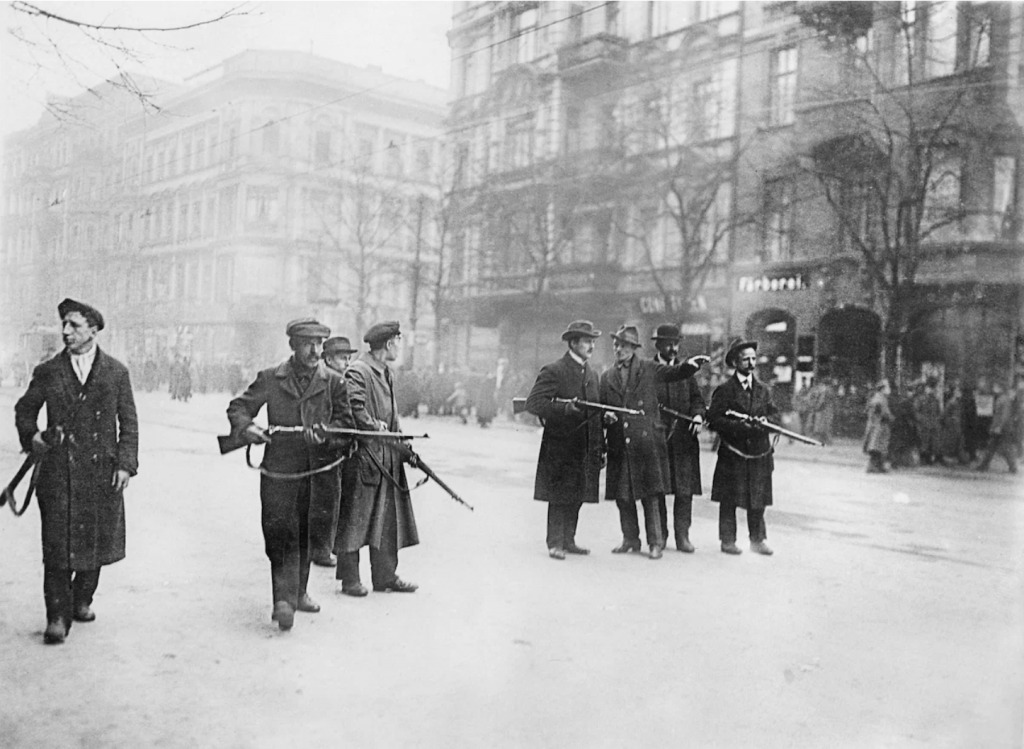
Spartacist rebels
The Jewish Communist, Karl Radek, described Luxembourg’s pamphlet as the first document of German communism. So German communism intellectually began with a Jewish woman’s ideas — a fact that the far-right Germans most definitely exploited. The left-wing movement of Luxembourg reached its apex in the Spartacist revolt in 1919. It began as a massive demonstration on January 5th, in which one hundred thousand people assembled. In the following seven days, armed rebels took over the offices of the major newspapers, including Vorwarts, a publication of the Social Democrat party. Their mission was to destroy freedom of the press. They also took over the SPD’s main office in Berlin and set up snipers in and around the city.
Here was a clear example of left-wing terrorism, influenced by Jewish atheists like Rosa Luxembourg, Marx and Lenin. But this was the time when the far-Right had their moment to strike. President Frederich Ebert unleashed the nationalist paramilitary, the Freikorps, on the Marxist Spartacist rebels. The Marxists were swiftly crushed. These events were closely observed by Adolf Hitler who saw the hand of the “international Jew” behind them. He described the Freikorps’ crushing of the Spartacist rebels thusly:
“large numbers of young Germans were found who were ready to button on the military uniform once again in the service of ‘Peace and Order’, as they believed, shouldering the carbine and rifle and donning the steel helmet to defend the wreckers of the Fatherland.”
The victory over Rosa Luxembourg’s Spartacist revolt is then written of by Hitler as such: “The German people were not yet ripe to be drawn into the blood swamp of Bolshevism, as the Russian people had been drawn.”
In Mein Kampf, Hitler writes of how because of the socialist Jews, the working class “became a fighting weapon in the hands of the Marxists. The trades union is not naturally an instrument of class warfare; but the Marxists transformed it into an instrument for use in their own class struggle. They created the economic weapon which the international Jew uses for the purpose of destroying the economic foundations of free and independent national States, for ruining their national industry and trade and thereby enslaving free nations to serve Jewish world-finance, which transcends all State boundaries.” Hitler emphatically wrote that the Jews, through the Bolshevik Revolution, took over Russia and wanted to do in Germany exactly what they did to the Russian people, imposing gulags, starvation and mass executions:
“It must not be forgotten that the international Jew, who is to-day the absolute master of Russia, does not look upon Germany as an ally but as a State condemned to the same doom as Russia.”
Hitler then describes the crimes of the Bolsheviks as such: “thievery and plunder and robbery.” He then writes: “the analphabetic Russian became the slave of his Jewish dictators”. The thing is, Hitler referenced certain facts, such as the threat of Communism and how its ranks had many Jewish figureheads, and this is what made him so dangerous. The weaponization of facts is more destructive than any blatant lie. What Hitler was saying was quite clear: ‘The destruction that the Bolsheviks have brought upon Russia, they desire to do to Germany, unless you elect a hero who will save you.’ The German people would end up seeing Hitler as their hero to save them from Bolshevism and ultimately from “the international Jew.”
There is no doubt that Jews were overrepresented in the ranks of the Bolsheviks. As the prominent historian Michael Burleigh wrote:
“It was true that some radicalized Jews were prominent in Bolshevik Russia and Hungary, and in attempts to install such regimes in Germany. The Hungarian revolutionary Bela Gun; Tibor Szamuely, the head of the Red Guards; and Hungary’s War Minister Vilmos Bohm were Jews, as were many political commissars and the personnel of revolutionary tribunals.” (12)
The ranks of the major Bolshevik officers had an overwhelming number of Jews, despite being an ethnic minority within the Russian Empire. As the Yale University professor Timothy Snyder wrote: “About 40 percent of high-ranking NKVD officers had Jewish nationality recorded in their identity documents”.
It was this reality that the Nazis used to justify their genocide of the Jews and others. In the Nazi mind, Jew became synonymous with Bolshevik.
The Nazi party was merely a product of its time. It was made within a zeitgeist in which many people recognized that Communism and degenerate movements had Jews behind them. This view was mainstream. For example, the Noble Prize in Literature laureate, Thomas Mann, wrote this about Jewish intellectual radicals: “a world which retains any instinct of self-preservation must act against this sort of people with all the energy that can be mobilized and with the swiftness of martial law.” Reflecting on how antagonism towards Jewish intellectuals and revolutionaries went mainstream in Weimar Germany, the historian Michael Brenner states that in Munich “hostility toward the Jews, a time-honored topic, had become a political tool with unusual explosive power.”
At this point in history, there had not been an anti-Jewish pogrom in Germany for centuries, but within the 20th century, talk of a pogrom became widespread. So much had the animosity against the Jews grown, that it entered the political arena. Hence why as soon as Gustav von Kahr became prime minister of Bavaria in 1919, he vowed to take “strict action against foreign infiltration by tribal strangers, maintaining the purity of our own people from contamination by foreign elements.” Kahr did not immediately do what he said was going to do, but he did decree expulsion orders against local East European Jews when he became state commissioner in 1923, and these were carried out to some extent. In the past there was a distinction that was made between German Jews and Jews from Eastern Europe, but at this point this difference was no longer seen by many Germans in Bavaria.
Helene Cohn wrote a letter to the Jewish newspaper, Das Judische Echo, in which she lamented that Germans in Bavaria no longer saw any difference between German born Jews and immigrant Jews from Eastern Europe. “Never before in my life,” she wrote, “have I sensed around me such a degree of hate-filled passion as in the streets of this city. When I buy newspapers on the street corner, look at bookstore displays, hear a conversation in a tram or restaurant – everyone is filled with hate and inflammatory defamations of Jews”.
Helene wrote that there was a certain madness that had had struck people who could think of nothing else besides “hating and annihilating the 2,500 Jewish families within the walls of the city of Munich.” While there was some politicians in the Social Democratic Party who tried to resist this antisemitic surge, the vibes of the time could not be availed. In June of 1923, the writer Thomas Mann (who beforehand had written that the world must act against radical Jewish intellectuals) described Munich as the “the city of Hitler, the leader of the German fascisti; the city of the Hakenkreuz [swastika], this symbol of popular defiance.”
The hatred in the political air had grown thick, but many of the Jewish revolutionaries were clueless to this. The Jewish historian Walter Laqueur wrote that Jewish radicals “were quite oblivious to one basic existential fact: that they were living in an intellectual ghetto, that the great majority of Germans did not just dislike them, but disputed their very right to have a voice as far as the future of Germany was concerned. . . . Nor did it matter that most of them had no longer any tie with the Jewish community.”
The right-wing was rising up in response to Communist revolutionaries. In the fall of 1923, the Reichswehr commander Hans von Seeckt (who backed the Ottoman orchestrated Armenian Genocide), the pan-German leader Heinrich Class, alongside right-wing industrialists, determined that a communist uprising could be to their advantage. They planned on using a Communist takeover to rile up the entire right-wing behind a tyrannical “Directory,” which would then takeover the government, crush the Communists and suspend parliamentary democracy. (13) Communist terrorists were most definitely on the prowl at this time. In October of 1923, Communists entered coalition governments in Saxony and Thuringia. What followed was Communist terrorism in which armed Marxists (“Proletarian Hundreds”) formed together as proxies of the Comintern in Moscow. Violent mobs raided farmlands, and stole food from farmers. Employees were assaulted, and the Communists would put red flags and placards around their necks in humiliation ceremonies. Expectedly, this uprising was crushed by the Germany army. (14)
In the midst of all this chaos, a rage was brewing in the political air of Germany, and the tides were turning against the Jews. A conspiracy had been mulled for years at this point by a circle of right-wing thinkers. They wished to work with Erik Ludendorff, the most infamous general of the First World War, who had been living in Sweden after he ran away upon Germany’s surrender (afraid that he would be forced to stand trial by the Allies for invading Germany’s neighbors and for war crimes). In February of 1919, Ludendorf heard that his nationalists friends in Germany wished for him to return and that he could come back safely if he wished. While there was a movement inside Germany to force Ludendorff to stand trial, there were elite circles who wished to bring his nationalism back to life.
More specifically, they wanted Ludendorff to come back to Germany to further popularize his narrative of the “stab in the back” theory. In Ludendorff’s telling, Germany was winning the war, but certain Jews sparked workers’ strikes in the country’s military factories, and these strikes hindered Germany from having victory. This narrative grew in popularity. Ludendorff began to notice that when he spoke of Masons and Catholics ruining Germany, he received little attention. But, when he spoke of Jews, his audience grew. This bespoke of the tide turning against the Jews in Europe. Amongst his fans was admiral Adolf Hitler, who later said of the organizers of the workers’ strikes: “If at the beginning of the war and during the war, 12,000 or 15,000 of these Hebrew corrupters of the people had been held under poison gas, as happened to hundreds of thousands of our best German workers in the field, then the sacrifice of millions at the Front would not have been in vain.”
Hitler would also write in his Mein Kampf of these workers’ strikes and how they were led by Jewish unionists: “It strengthened the enemy belief in victory and relieved the paralyzing despair of the Allied front. In the time that followed, thousands of German soldiers had to pay for this with their blood. The instigators of this vilest mass of scoundrel tricks were Jews, and unions led by Jews.” (15)
Walter Rathenau, a Jewish industrialist and the minister of reconstruction in the new Weimar Republic, was on the crosshairs of Ludendorff who tied him to his “Stab in the Back” narrative. Rathenau insisted that Germany could fulfill its obligations under the Treaty of Versailles. This enraged the nationalists, and was used as proof that Rathenau, being a Jew, was a traitor to Germany. German historian Wolfram Wette wrote: “Ludendorff, a pronounced anti-Semite, attempted to forge a link between Rathenau and the legend of the Stab in the Back.” The idea spread like wildfire, and was made manifest in the streets. Men in public could be heard screaming: “Kill Walter Rathenau, the goddamn German Jew!” The historian Jeffrey Verhey explained that “during the 1920s it was almost impossible to find a nationalistic narrative of the war that did not include the Stab in the Back legend.” The renown historian on the Third Reich, William L. Shirer, wrote that “the legend of the Stab in the Back, more than anything else, would undermine the Weimar Republic and pave the way for Hitler’s ultimate triumph.” (16)
PART 10
HITLER AS PROPHET AND THE SLAUGHTER OF THE JEWS
The desire to destroy the Jews was definitely in the air of the political climate in Germany, and really showed itself during the reign of Hitler. In 1939, Martha Dodd, the daughter of the US ambassador to Germany, warned: “If Hitler is allowed by his own people and by the people and leaders of the world to remain in Germany, I fully believe that eventually there will be no Jews in Germany … the Jews should recognize, once and for all, that Fascism, no matter what its local color or brand, is bent on the extermination of their people.” (17) In 1931, a pogrom broke out in the Berlin neighborhood of Kurfurstendamm where many Jews lived. The nationalists involved were members of the Nazi SA and could be heard screaming: “Perish Judah!” And “death to Jewry.” (18) Every Jew became an enemy; there were no innocents. “Every Jew is a sworn enemy of the German people”, wrote Josef Goebbels. “If he does not make this hostility plain, it is only from cowardice and shyness, not because he loves us.” (19) Germany — and Europe for that matter — was ripe for accepting a genocide of the Jews. Hitler was bent on exterminating the Jews, seeing it as needed punishment for Germany’s defeat in World War One. Hitler told the Czechoslovak foreign minister in 1939: “That day shall be avenged … The Jews shall be annihilated in our land.” (20) Hitler saw himself as a prophet who would prevent the Bolshevik takeover of Germany and bring about the annihilation of the Jews in Europe:
“Today I will be a prophet again and say, if international finance Jewry in and outside Europe succeeds in plunging nations into another world war, then the end result will not be the Bolshevization of the planet and thus the victory of the Jews — it will be the annihilation of the Jewish race in Europe.” (21)
When the Nazis were massacring the Jews, it was seen as a fulfillment of Hitler’s prophecy. On October 5th of 1941, the German police secretary Walter Mattner, wrote a letter to his wife describing how he took part in the butchering of Jews in the city of Mogilev in Belarus. In the first part of the letter he concludes that slaughtering the Jews is justified because the Jews would have murdered his people if the situation had been the other way around under violent Bolshevism:
“One more thing I have to write to you. I was actually also there the other day in the big mass death. With the first truckload my hand shook somewhat as I shot, but one gets used to it. At the tenth truckload, I already aimed calmly and shot straight at the numerous women, children and infants. I was mindful that I also have two infants at home who would have been treated by this horde [the Jews] exactly the same, if not ten times worse… Infants flew through the air in high arches, and we did them in already in midair before they [fell] into the pit and into the water”
In the next part of the letter, Mattner says that the butchering of the Jews is Hitler’s prophecy coming to pass:
“Hitler’s words are becoming true when he said at the beginning of the war: if Judaism thinks to instigate another war in Europe, then this war will not be its victory but the end of Judaism in Europe… Mogilev lost again [Jews equal to] a number with the three zeroes, but this is not a big thing here. I am actually happy, and many here say, that when we are back in the Heimat it will be the turn of our local Jews.” (22)
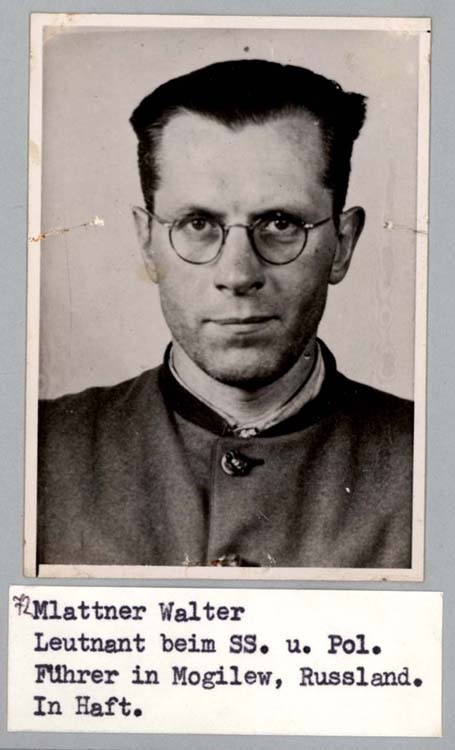
Walter Mattner
Here we can see how the extermination of the Jews was seen as self-defense and as a fulfillment of Hitler’s prophecy of the annihilation of the Jews to prevent “bolshevization.” If one argues that this is simply the opinion of one Nazi officer in a mere letter, then one can look at the German Order Police’s training journal:
“The word of the Fuhrer [in his speech of 30 January 1939] that a new war, instigated by Jewry, will not bring about the destruction of antisemitic Germany but rather the end of Jewry, is now being carried out. The gigantic spaces of the east, which Germany and Europe have now at their disposition for colonization, also facilitate the definitive solution of the Jewish problem in the near future. This means not only removing the race of parasites from power but its elimination [Ausrottung] from the family of European peoples. What seemed impossible only two years ago, now step-by-step is becoming a reality: the end of the war will see a Europe free of Jews.” (23)
The rage towards the Jew as a reaction to Bolshevism grew into a violent hysteria that erupted with demonic frenzy. This was seen in the SS leader, Hans Kruger. In October of 1941, Kruger oversaw the slaughter of ten thousand Jews outside Stanislau. He then billed the Jewish Council two thousand zloty for the bullets. A few days before this, Kruger massacred the Jews of Nadorna, jeering at his Orthodox Jewish victims by shouting: “Where is your God? Where is your Jehovah?” (24)
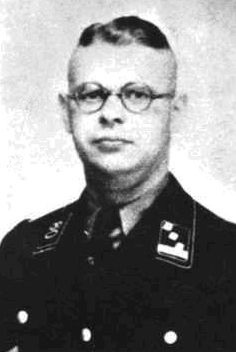
Hans Kruger
This satanic frenzy was seen in Romania, in the Bucharest pogrom of January of 1941 in which 124 Jews were murdered and numerous synagogues were burned to the ground by Romanian nationalists. Jews were taken to a slaughterhouse and hung on meathooks alive. The American diplomat, Franklin Mott Gunther, visited the slaughterhouse in the aftermath of the pogrom, and wrote back to Washington:
“Sixty Jewish corpses were discovered on the hooks used for carcasses. They were all skinned….and the quantity of blood about was evidence that they had been skinned alive”.
The World Jewish Congress reported on the horrors that took place:
“Wild animals bite and kill, but never think of defiling dead bodies, as was the case of all these innocent beings. Tongues cut out, eyes plucked out, fingers and hands chopped off, skin torn from still-living bodies, bodies mistreated, hacked and wounded, hung on slaughterhouse hooks with a label attached marked ‘kosher’, heads cut off, and organs torn out — this is the balance sheet of the Legionnaires’ heroism.” (25)

Burnt synagogue from the pogrom in Bucharest
The Holocaust was not merely a German phenomenon. While it was led by Germany, it would have been impossible to orchestrate such a massive and systematic slaughterhouse of human beings without other European countries partaking in the butchery. There were Europeans outside of Germany who were more than willing to kill Jews and without having to be forced, happily slaughtered their Jewish neighbors. If one were to have talked with these other Europeans who hacked Jews to pieces why they were so enthusiastic about killing Jews, they would have told you that the Jews were the pushers of Bolshevism and led the Marxist terror, and that the only way to have a true nationalist country was to purge out the Jews.
This was clearly the case in Romania. After the Germans ended Soviet rule over Romania, it was open season on the Jews by the nationalist inhabitants who saw the Jews as those behind the Bolshevik terror that they had suffered under. There was a town called Iasi which had a population of 100,000 people, half of whom were Jews. The Romanian nationalist paramilitary group, the Esalon Operativ, entered Iasi and began spreading fliers claiming that the Jews were flashing lights to give signals to the Soviet Communist air force. Between June 23rd and 30th, units of the Esalon Operativ, Romanian soldiers, bloodlustful natives and members of the SS, butchered ten thousand Jews in Iasi. Ion Antonescu, the Prime Minister of Romania, later recounted: “I let the mob loose to massacre them. I withdrew to my citadel, and after the massacre I restored order.” On June 30th a military telegram read: “General Antonescu ordered that all the Jewish Communists from Iasi and those who were found with red flags and firearms were to be executed tonight.” The Italian journalist, Curzio Malaparte, who was in Iasi at the time, recalled what happened:
“Hordes of Jews pursued by soldiers and maddened civilians armed with knives and crowbars fled along the streets; groups of policemen smashed in house doors with their rifle butts; windows opened suddenly and screaming disheveled women in nightgowns appeared with their arms raised in the air; some threw themselves from windows and their faces hit the asphalt with a dull thud. Squads of soldiers hurled hand grenades through the little windows level with the street into the cellars where many people had vainly sought safety; some soldiers dropped to their knees to look at the results of the explosions within the cellars and turned laughing faces to their companions. Where the slaughter had been heaviest the feet slipped in blood; everywhere the hysterical and ferocious toil of the pogrom filled the houses and streets with shot, with weeping, with terrible screams and cruel laughter.” (26)
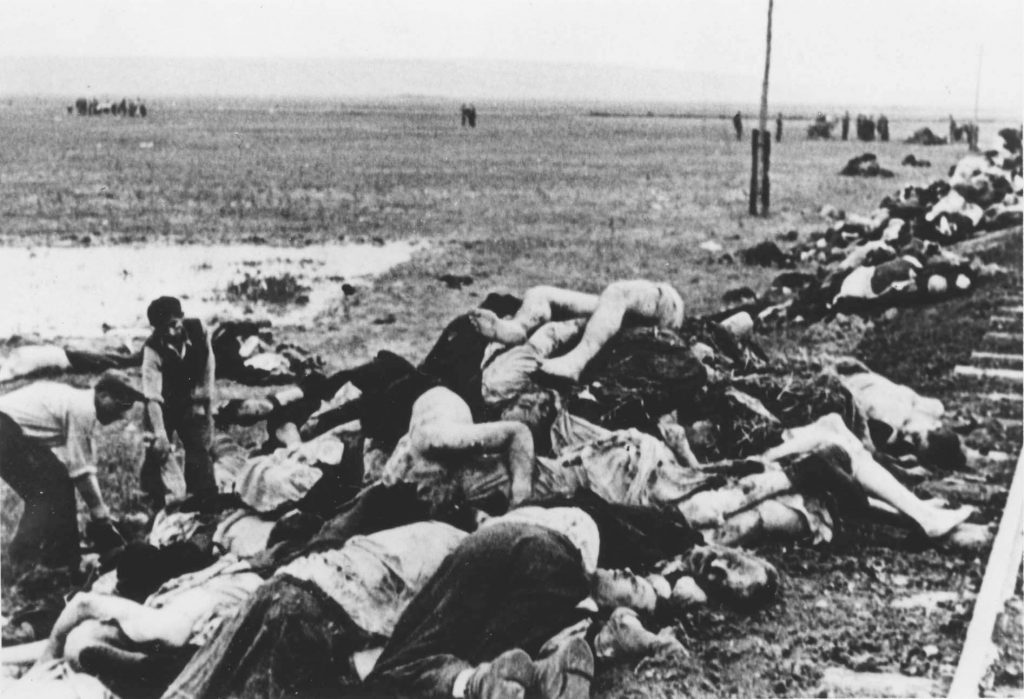
Bodies from the Iasi massacre
The killers were enflamed by the speech Antonescu had made on July 8th in a cabinet meeting, in which he ordered his people to forsake “sugary and vapid humanitarianism”. For Antonescu and his ilk, the German war on the Soviets and the nationalist fury that had taken over the political climate of Europe, provided a once in a lifetime opportunity to butcher the Jews. This was now an era of lawlessness:
“You must be merciless. … I do not know when, after how many centuries, the Romanian nation will again enjoy this total freedom of action, with the possibility for ethnic purification and national revision. This is the hour when we are masters on our territory. Let it be used! I do not mind if history judges us barbarians. The Roman Empire performed a series of barbarous acts against its contemporaries, and yet it was the greatest political establishment. There are no other favorable moments in our history. If need be, shoot with machine guns, and I say that there is no law.” (27)
Romanian nationalists aided the Germans in their invasion of neighboring Ukraine, to not only fight the Soviets but to participate in the killing fields of the Jews. In the autumn of 1941, the Romanian Fourth Army took over Odessa, helping the German Group D take over Bessarabia and North Bukovina. In these latter regions, some 150,000 to 160,000 Jews were slaughtered, the vast majority by the Romanian Fourth Army. Jewish survivors of this slaughter were forced into camps and ghettos and then driven across the Dniester river into Transnistria. During this brutal march, Romanian soldiers and officials extorted the Jews so much that by the time they reached Transnistria they had nothing. Why such cruelty? Why such murderousness?
The Romanian nationalists would have told you, If we do not remove these Jews, then we will further suffer under the Bolshevik reign of terror. On October 11th, 1941, Wilhelm Filderman, the President of the Federation of Jewish Congregations in Romania, wrote a letter to Antonescu demanding mercy for the deportees, protesting the “death, death, death of the innocent people with no other guilt than that of being Jews”. On October 19th, Antonescu replied to Filderman, harkening back to the Bolshevik terror that Romania suffered through:
“During the Bolshevik occupation, those whom you now bewail, informed on good Romanians, thus surrendering them to the orgies of the Russians and bringing grief and mourning into numerous Romanian homes. … Do not pity, if you really have a soul, those who do not deserve it; pity those who merit it!” (28)
The message was clear: if the Jews are not brutalized, then they will inflict us with Bolshevik violence. Antonescu made this quite explicit in the postscript of the letter where he recounts a story of a Romanian man who was brutally murdered by Bolshevik Jews:
“PS — A wounded soldier of Piatra Neat was buried alive upon the order and before the eyes of Jewish Commissars in spite of his pleas not to be buried as he had four children.”
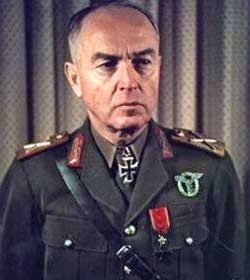
Ion Antonescu
On October 26th of 1941, Soviet Commandos detonated mines underneath the headquarters of the Romanian Fourth Army in Odessa, killing forty-one people, including General Glogojeanu and five German naval officers. An hour and a half later, the Romanian General Trestioreanu commenced a violent response towards Jews, because they were seen as synonymous to Communists. About five thousand Jews and Communists were hung from lampposts, telegraph and tram posts in every square in Odessa. One survivor described Odessa as “the city of the hanged.” German intelligence reports state that the next morning, nineteen thousand Jews were herded into the docks and mass executed, their corpses burnt with petrol. By the middle of the day, Ion Antonescu ordered that two hundred Communists be executed for every one Romanian or German officer killed, and one hundred more for the dead of other ranks. But again, Jews were made synonymous with Bolsheviks, so the order from Antonescu required a victim to be drawn from every Jewish family. The manner in which these victims were to be killed was described in a document called Order No. 563, found in the Romanian military archives:
“As reprisals, Marshal Antonescu orders: 1. The execution of all the Jews of Bessarabia who fled Odessa. 2 All individuals covered by the provisions of Order No. 302858/3161 of 23 October 1941 who were not yet executed, and others that can be added, will be crammed into a previously mined building that will be blown up.”
To fulfill the order, the Romanian officers marched thousands of Jews into a Marxist collective farm (known as a kolkhoz) at Dalnik. They shot and killed them during the march, and the rest were crammed into warehouses, mowed down with bullets or blown up with grenades. Forty thousand Jews were murdered in this massacre. (29)
The Romanians who wanted Jews exterminated would have pointed — as justification for their murderous deeds — to the crimes of Jewish Bolsheviks. Romania had already a long history of enduring Communist violence at the hands of its Jewish subscribers. Max Goldstein, a communist anarchist, attempted to murder Romania’s Minister of Internal Affairs, Constantin Argetoianu, who was the country’s most vocal anti-Communist. In December of 1920, Goldstein, alongside another Romanian Jewish communist named Leon Lichtblau, bombed the Romanian senate, murdering the Minister of Justice, Dimitrie Grecian, and two senators, Demetriu Radu and Sierra Gheorghiu.
And what has happened in our own time shares a parallel with the past. The rise of Bolshevism had an immense number of Jews behind it, and the Bolshevik terror was its product, with its slaughtering of tens of millions of people; this horror and bloodbath got people to have an angry and antagonistic view on the Jews, and antisemitism saw a surge. In our own time, many people in the Western World have begun a process of rethinking what they were told, that Israel is the West’s “greatest ally” and “God’s chosen,” and are now seeing such accolades with contempt. What ignited and skyrocketed this rise in anti-Israel feeling was the slaughterhouse that Israel made Gaza into. Just as the murderous the Jewish Bolsheviks sparked a surge in anti-Jewish sentiment, the murderousness of Israel has kicked started a revival of antisemitism.
PART 11
MARXIST VIOLENCE IN GERMANY AND THE RISE OF THE FREIKORPS
More and more westerners are looking with favored eyes upon far-right ideologues against the Jews, as a response against the violence of Israel and the excessive influence of the pro-Israel lobby. And what happened before the rise of the Nazis? There was Bolshevik violence influenced by certain Jews, and this was met by a rise of right-wing militancy. For example, during the Sparticist uprising of Rosa Luxembourg, Germany’s Defense Minister Gustav Noske, unleashed a right-wing, nationalistic group of volunteers known as the Freikorps on the left-wing militants.
The right-wing backlash to Bolshevik violence was now in third gear. The Freikorps was made up of very angry men, who felt betrayed and held onto a very intense sense of masculine comraderie. Their origin goes back to the end of World War One. Once the German Empire was defeated in the First World War, German officers in the Baltic region and Silesia (which lies in modern day Poland including parts of Germany and the Czech Republic) formed paramilitary units to stop the advance of the Red Army to protect ethnic Germans living in those regions. The two main paramilitary groups were the Eiserne Division (“Iron Division”) and the Baltische Landeswehr (“Baltic Defence Force”).
Together, they would form the “Freikorps” (Free Corps). The United States and Britain wanted these forces to be present to use them as a proxy against the Soviet Union (just like today the US and the UK are backing the neo-Nazi Azov fighters in Ukraine against the Russians). They fought fiercely against the Russians and Poles, and defeated the Red Army with the help of Latvian and Estonian forces. After this, the Allies ordered the withdrawal of these paramilitaries from the Baltics. But the Freikorps refused to submit to this demand. With the help of the local German population, the Freikorps launched a takeover of Latvia and captured the city of Riga.
One of the Freikorps soldiers who took part in the fight against the Bolsheviks in the Baltics was Ernst von Salomon who wrote a description of the worldview of this paramilitary group:
“When we probe into the make-up of the Free Corps fighter we can find all the elements which ever played a role in German history except one: the bourgeois. And that is only natural because the peculiar experience of these men … had forged them into a single force of consuming destructiveness … The task required [of the warrior is] … that all ballast, all sentimentalism, all other values must be ruthlessly cast aside so that his whole strength could be set free.”
´Freikorps soldier
This belief against sentimentalism was really one of cruelty, and it reflected a common way of thinking within the German armed forces. For example, during the First World War, Germany supported the Ottoman Empire’s genocide of the Armenian people. The justification for this was that the Armenians tended to be supporters of Russia, and the Russians wanted to use them as a proxy against the Ottoman Empire and carve out a chunk of this empire, thus making Germany’s Turkish ally smaller and weaker, creating a new Russian ally (an independent Armenia), fortifying Russia’s influence and position in the South Caucasus, and therefore weakening Germany’s geopolitical influence. By eliminating the Armenians, the Russians would lose a key ally in the South Caucasus region, and a weaker Russia was always seen as a benefit to the Germans, regardless of whatever inhumanities one may do to fulfill this goal. Thus, “sentimentalism,” or compassion had to be thrown out of the window. This was clearly exemplified by Hans von Seeckt, one of Germany’s most formidable strategists for the First World War. Because of Germany’s support for the extermination of the Armenians, clergymen, politicians and regular citizens expressed their outcry. Von Seeckt addressed these protestations in a 1918 letter to Berlin:
“It is an impossible state of affairs to be allied with the Turks and to stand up for the Armenians. In my view, any consideration, Christian, sentimental or political, must be eclipsed by its clear necessity for the war effort.”
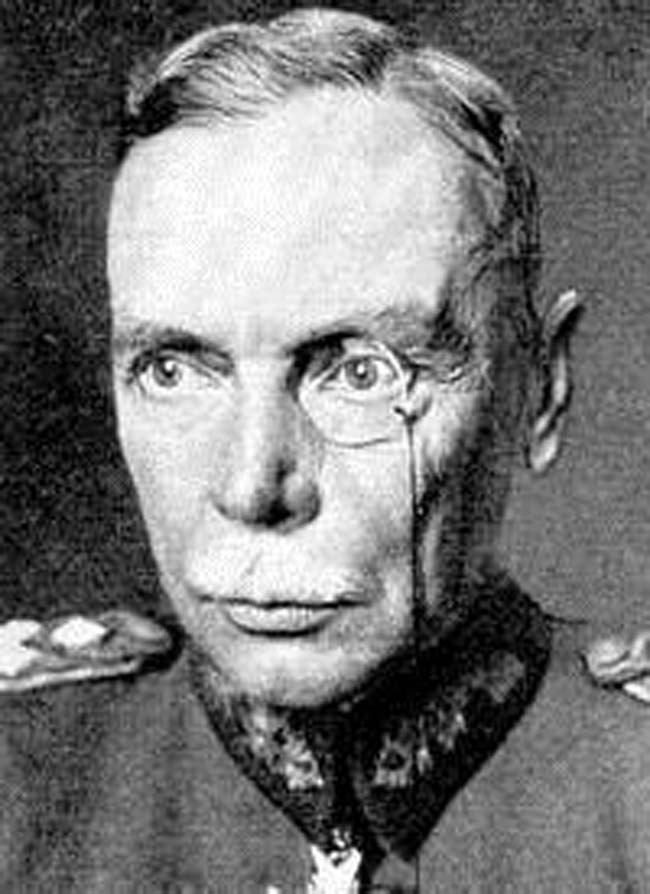
Hans von Seeckt
Thus, the rejection of compassion was policy in the German military, and this way of thinking was carried over by the Freikorps paramilitary who would end up being amongst the first followers of Adolf Hitler. The seed of Nazism began germinating against Bolshevism, which was truly a force of terror. Thus, the Freikorps were welcomed as heroes when they returned back from the Baltic regions, for they had fought against Bolshevik terror; and so they were seen as even greater heroes when they killed Bolsheviks within Germany’s borders. They took the lives of Karl Liebknecht and the Jewish atheist Marxist, Rosa Luxemburg, on January 15th, 1919, and in various parts of Germany Freikorps fighters raided meeting centers for Left-wing militant activists. (30)
Because Jews were overrepresented in the Bolshevik cause, Jews became associated with Marxism, and also synonymous with this ideology, alongside being a subversive and amoral race. The Nazis and the European nationalists like them pointed to facts to justify their worldview. It was undeniable that there were indeed Jews who were Bolshevik mass murderers, and Jews were in very prominent positions within Bolshevik power. The historian Michael Burleigh wrote that “It was true that some radicalized Jews were prominent in Bolshevik Russia and Hungary, and in attempts to install such regimes in Germany.” (31) Because there were Jews who tried to make Germany into a Bolshevik satellite of Soviet Russia, Jews were seen as really a threat to Germany’s existence. Seeing from afar what horrors certain Bolshevik Jews were doing in Eastern Europe, and how they were active in Germany, deeply intensified this mood. The Hungarian Bolshevik Jew, Tibor Szamuely, entered Germany in December of 1918 and helped form the Spartacist League with Rosa Luxemburg. This was the same Szamuely who fomented violent revolution in Hungary, telling his fellow Marxists to kill political enemies:
“Everywhere counter-revolutionaries run about and swagger; beat them down! Beat their heads where you find them! If counter-revolutionaries were to gain the upper hand for even a single hour, there will be no mercy for any proletarian. Before they stifle the revolution, suffocate them in their own blood!”
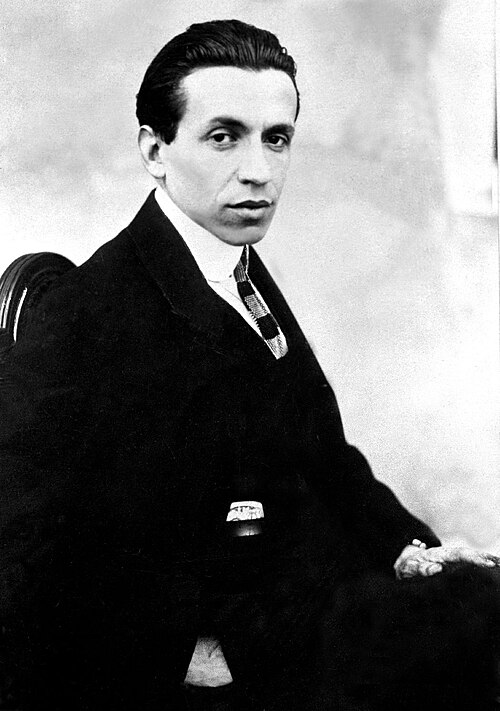
Tibor Szamuely
The Communist members of Hungary’s Social Democrat-Communist coalition government launched a successful coup, and Hungary was transformed into the Hungarian Soviet Republic wherein Szamuely became a prominent politician. The leader of this Soviet government was Bela Kun, a Jewish Communist and a mass murderer. Szamuely himself was bloodthirsty. He was of that Bolshevik gang that spoke of equality and fairness, but once he got power, he became a murderous tyrant. He wanted blood, and loved butchery, declaring in a speech on April 20th, 1919:
“Power has fallen into our hands. Those who wish the old regime to return, must be hung without mercy. We must bite the throat of such individuals. The victory of the Hungarian Proletariat has not cost us major sacrifices so far. But now the situation demands that blood must flow. We must not be afraid of blood. Blood is steel: it strengthens our hearts, it strengthens the fist of the Proletariat. Blood will make us powerful. Blood will lead us to the true world of the Commune. We will exterminate the entire bourgeoisie if we have to!”
On April 21st, 1919, Szamuely was appointed president of the Committee Behind the Frontlines, and for this occasion he proclaimed another call for bloodshed:
“Whoever raises their hands against the power of the proletariat, whoever incites or supports counterrevolutionary initiatives openly or covertly, or remains silent about such attempts, whoever does not comply with the orders of the Chief Command of the Army or the decrees of the Revolutionary Governmental Council, signs his own death warrant. Our duty is the execution of this warrant.”
Revolutionary tribunals were set up and between 370 and 587 people were executed under Szamuely. When Hungarian Jewish Communist leader, Bela Kun, served as the chief of the Cheka in the Crimea, some sixty to seventy-thousand Tatars were massacred. But these were not the only victims of the Bolsheviks in Crimea. During the Russian Civil War between the Red and White Armies, Crimea was used as a major hub by the White Army, and there were many Tatars who were against the Bolsheviks. When the White Army in Crimea, led by General Pyotr Wrangel, lost in the war, about 50,000 prisoners of war, and also anti-Bolshevik civilians, surrendered, were promised amnesty, and were all slaughtered. The ones who gave the order to murder these people (with the approval of Vladimir Lenin) were the Jewish atheist, Bela Kun, and a Jewish woman named Rosalia Zemlyachka. In the process of these mass executions, some sixty to seventy-thousand civilian Tatars were massacred. The background story of Zemlyachka is an attestant to the prevalence of Jews in the Bolshevik movement. In the middle of 1903, Zemlyachka went to the Second Congress of the Russian Social Democratic Labor Party in Brussels; out of the forty-three delegates who attended this congress, twenty were Jews. These massacres done by Kun and his comrades was observed by the Nazis as they were bent on justifying their extermination of the Jews. Josef Goebbels, in 1935, wrote of Kun and his butchery:
“The Jewish Tschekist, Bela Kun, made an experiment which rivalled the Paris Commune in bloodshed when he ordered the execution of 60,000 to 70,000 people in the Crimea. For the most part, these executions were carried out with machine-guns. At the Municipal Hospital in Alupka, 272 sick and wounded were brought out on stretchers in front of the gate of the Institution and there shot. The truth of this has been officially confirmed in the report made to the Geneva Red Cross. During the 133 days of his Terror Rule in Hungary the Jew, Bela Kun, had innumerable men murdered.”
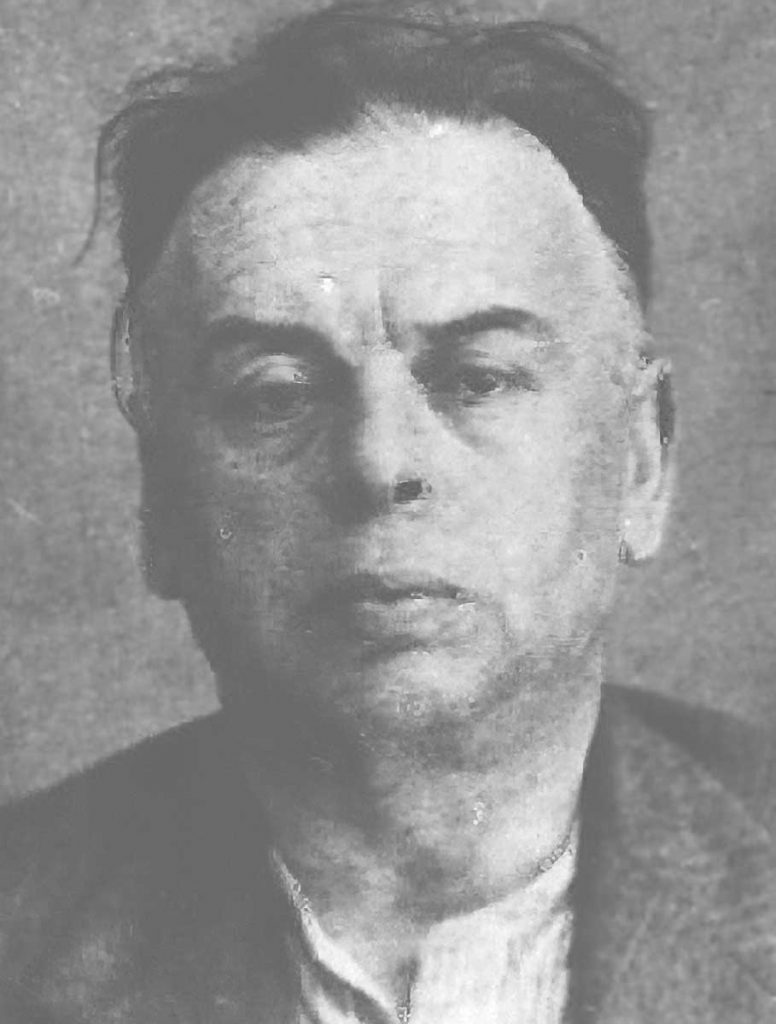
Bela Kun
PART 12
JEWISH NATIONALISTS AS A PRECURSOR TO A RIGHT-WING SURGE
The German region of Bavaria was a hotbed for Communist terrorism, and also a place where nationalism had been thriving. Here, the two factions would go to war. In November of 1918, the Jewish socialist Kurt Eisner sparked a revolution which overthrew the Wittelsbach monarchy in Bavaria, an action which got people to praise him as “the symbol of the Bavarian revolution”. Jews were at the forefront for the left-wing socialist revolution in Bavaria, a fact that was pointed out by the Nazis to justify antisemitism. Hundreds of inflammatory letters were written against the Jewish revolutionary Kirk Eisner and “fellow members of his race”, demanding that “Jews like this must now be hunted.” As the historian Michael Brenner writes:
“The Jews in Hitler’s Munich of the early 1920s paid the price for the failed left-wing revolution and served as a foil for the right-wing revolution to come. They were the first victims of Hitler’s long and twisted road to power.”
Kurt Eisner
The Nazis pointed to the Jewish socialists such as Rosa Luxemburg and categorized them as the threat of the “Judeo-Bolshevik.” The presence of socialist Jews bent on revolution was one of the main driving factors behind the surge in popularity for Nazism. Brenner notes that “without a Leon Trotsky and a Rosa Luxemburg, without a Gustav Landauer and an Eugen Leviné . . . the world would perhaps have lacked the image of the ‘Judeo-Bolshevik’”. Although Bavaria had a good number of socialists, they were not enough to crush the nationalist sentiment that was so strong in the region. In February of 1919, the right-wing militant Count Anton Arco-Valley (who was half-Jewish himself) shot the Jewish socialist Kurt Eisner in the back as he was walking to the state parliament building.
Count Anton Arco-Valley
A crowd grabbed ahold of von Valley, pummeled him, shooting his throat and sticking a bullet right into his skull (amazingly he survived). Anton murdered Eisner because, in his words, he was “a Bolshevik, he is a Jew, he’s not a German, he doesn’t feel German, he is undermining every kind of German feeling, he is a traitor.” This statement is no different from the very rhetoric declared by the Nazi Party in 1920: “Therefore we fight against every subversive, unGerman spirit, whether it emanates from Jewish or other circles. We are expressly opposed to the ever more ominous dominance of Jewry in government and public life… The flow of foreign races over our border must cease.” (32)
And yet, Anton, being in complete agreement with these words, was himself Jewish; but this did not stop him from being a far-right radical. He even tried to join the racist Thule Society but was rejected because as its leader Rudolf von Sebottendorf said, Anton was a “Yid.” Even the Nazis themselves recognized Anton as one who did a good action when he murdered Eisner. One Nazi newspaper wrote: “It is more than a cruel joke of world history that Kurt Eisner, who founded and laid down Jewish domination, had to fall at the hand of a half-Jew.”
So here, we have a right-wing Jew killing a left-wing Jew, and this was during the prelude to the rise of Nazism, which really goes to show that the presence of fanatically right-wing Jews can spell the rise of right-wing antisemitism. In fact, one of the most famous and prominent right-wing nationalists in Weimar Germany was a Jew named Paul Nikolaus Cossmann. He was at the forefront of the German nationalist movement before the Nazis took over. He hated the Jew Eisner and his allies, accusing them of raising “the devil’s empire on earth” and arguing that they were behind one of “the greatest crimes in German history.”
Cossmann, a Jew who converted to Catholicism, was one of the major promoters of the “stab-in-the-back” narrative that had been spreading like wildfire in Germany. The stab-in-the-back narrative — which taught that Jews were behind Germany’s defeat in World War One — was one of the beliefs that got people to praise and vote for the Nazis, and it was promoted intensely by this Jewish man, Cossmann. The Social Democrat lawyer Philip Löwenfeld declared, “One of world history’s bad jokes was that the two most important catchwords of the Nazis and the other nationalists fighting against the German republic came from an honest-to-goodness Jew.” But this did not save Cossman; for in the summer of 1942, he was deported by the Nazis to the Theresienstadt Ghetto where he died in hospital. Although he was an extreme proponent of German nationalism, and although he was critical of the Jews, he ended up being murdered by nationalists.
Paul Nikolaus Cossmann
In our own era we have seen many Jews supporting far-right movements in Europe. We have seen Jews support PEGIDA and the AfD in Germany and the anti-immigrant movement in Great Britain. But now we are seeing arise from the far-right movements in Europe a more anti-semitic nationalistic cause. So, just as there was Anton — a half-Jewish German nationalist, and Cossman, preceding the rise of the Nazis, today we have had Zionists backing nationalism as a prelude to the current surge of antisemitism. In 2018, Yoram Hazony, the president of the Theodore Herzl Institute (amongst the most prestigious of the zionist organizations) wrote an entire book praising nationalism. And currently, there is a massive wave of anti-Israel and anti-Jewish sentiment that is only growing. Nationalist Jews can act as a prelude to the nationalism that will turn on them. For all nationalism always comes down to the same thing: an intense hatred towards foreign influence, and the biggest foreign influence in the West stems from Israel. Thus, any nationalist surge in the West will inevitably lead to anti-Israel — and ultimately — to anti-Jewish sentiment.
There was immense anger that was sparked as a result of Eisner’s murder. The local poet Oskar Maria Graf described the tense political climate after Eisner’s assassination:
“The bells started ringing from all church towers, the trams stopped at once, here and there a red flag was being hung out a window with a black ribbon, and a heavy, uncertain silence came down. All people walked downtown, with grimaced faces. . . suddenly a fully laden truck with red flags and machine guns drove by, and from it loudly came calls: ‘Revenge! Revenge for Eisner!’. . . The masses started streaming through the city.”
Out of the 600,000 inhabitants of Munich, 100,000 of them marched at the funeral procession of the Jewish socialist, Kurt Eisner. Before thousands of mourners, Gustav Landauer (also a Jew) proclaimed: “Kurt Eisner, the Jew, was a prophet.” The fact that so many people in Bavaria (a region that would eventually hail Hitler with much intensity) praised a socialist Jewish revolutionary, attests to the fact that before the rise of Hitler’s popularity, antisemitism was not mainstream, Germany was full of liberals and thus was not a place that expected to see the ascendancy of a far-right nationalist power. The popularity of the Nazis was gradual, and people were shocked to see Germany go down the Hitlerian path that it did. It was not so different from today, with our liberals, our conservatives, our far-right and far-left. But what could cause a country as liberal as Germany to spiral down such a dark road wherein it saw the Jew as worthy of destruction? To a great extent, it was the presence of Jewish terrorism and the Nazis who use it as a pretext for their murderousness.
Riots broke out within the Bavarian parliament in the midst of which the Social Democrat leader, Erhard Auer (a political rival of Eisner) was shot by Alois Linder and the Major Paul Ritter von Jahreiß (Speaker in the Bavarian Ministry of War) was murdered. In April of 1919, Jewish anarchists Gustav Landauer, Ernst Toller and Erich Muhsam announced the establishment of the short-lived Bavarian Soviet Republic. Muhsam did not mind flaunting his Jewish identity while mocking Christians:
“Minister and agrarian,
Bourgeois and proletarian,
They all rejoice, each Aryan,
At this same time and wherever they’re able
The birth of Christ in that cow stable.
(Except the people for whom this was fate:
It’s Hannukah they’d rather celebrate.)”
After the Nazis took over Germany in 1933, Muhsam was arrested with Joseph Goebbels, the Nazi propaganda minister, calling him one of “those Jewish subversives”. He was sent to the concentration camp of Sonnenburg, and then to Brandenburg and finally to Oranienburg where he was brutally tortured, beaten and murdered, his corpse being discovered hanging in a latrine in the next morning. This was yet another case of the Nazis pointing to Jewish socialists, punishing them, to justify their mass murder of innocent people based on their ethnicity.
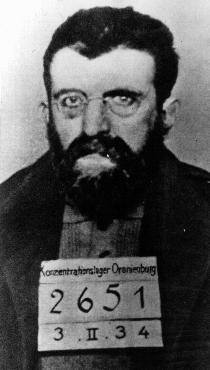
Erich Muhsam in the Oranienburg Concentration Camp
PART 13
JEWISH BOLSHEVIK UPRISING AND THE RISE OF HITLER
Jew became synonymous with socialist, or subversive, and then all Jews needed to die. Bolshevism was seen as something distinctly Jewish, and in turn no distinction was made between good and bad Jew in the killing fields. It went back to what Belloc warned in 1922, that the tensions between the European Christians and the Jews “will probably cease in violence. The danger is that if it ceases in violence a vast number of innocent will be involved with the guilty.”
Eventually, the Bavarian Soviet Republic was overtaken by another Jewish socialist, Eugene Levine, a Communist tied to Soviet Russia. During his rule, there were food shortages in Bavaria, especially milk. Already the murderousness of the Communist was made manifest. Eugen Levine wrote a letter to Vladimir Lenin in which he said that the shortage in milk was no big deal because it would mean bourgeoisie babies starving to death anyway: “What does it matter? … Most of it goes to the children of the bourgeoisie anyway. We are not keeping them alive. No harm if they die — they’d only grow into enemies of the proletariat.” Bavaria was eventually retaken by the right-wing paramilitary, the Freikorps, and Eugen Levine was executed.
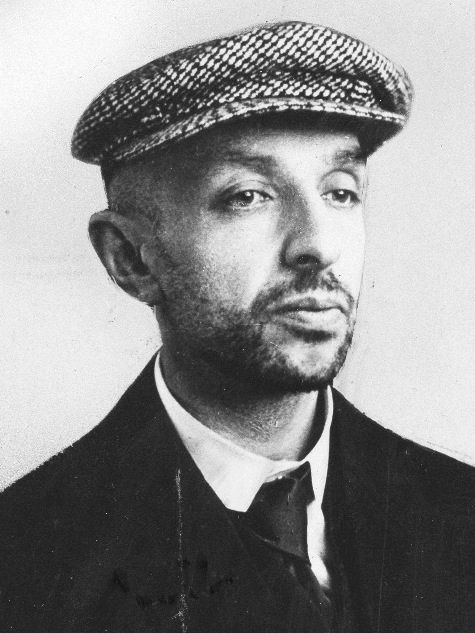
Eugen Levine
But the agenda to make Germany Communist did not stop. The Jewish atheist Bela Kun was a prominent figurehead within the Comintern in Russia who organized and coordinated an entire mission to transform Germany into a Communist country. Kun had an alliance with Grigory Zinoviev, a Jewish atheist who led the Communist International from 1919 to 1926 and who was a figurehead in the agenda to make Germany Communist. Zinoviev once wrote of his desire to murder ten million people in Russia:
“To overcome our enemies we must have our own socialist militarism. We must carry along with us 90 million out of the 100 million of Soviet Russia’s population. As for the rest, we have nothing to say to them. They must be annihilated.”
In 1921, during his alliance with Zinoviev, Bela Kun travelled to Germany where he advised the Communist Party of Germany to follow the “Theory of the Offensive,” which was something that was pushed by Zinoviev. Under this “theory,” Germany’s Communists would launch a violent revolution against the government. The German Jewish Communist, Ruth Fischer, said that “the working class could be moved only when set in motion by a series of offensive acts.” This meant revolution. This plan was launched and is known as the Marz Aktion or March Action which took place within central Germany. This was the final last major attempt by Bolshevik Jewry to takeover Germany.
This attempt at revolution was organized by the Zentrale, or the Central Committee of the German Communist Party which got its marching orders from the Jewish atheist, Bela Kun. The circumstances that spurred them to rise up in revolution were the belief that the workers would follow them due to the immense amount of inflation which was obviously detrimental, and the popularity for the United Communist Party of Germany (VKPD) which got 1,211,749 votes in the 1921 Prussian state election. Left-wing parties were very popular in urban zones in Germany.
On February 20th of 1921, the Communist Party of Germany (KPD) was the most popular party in the Halle-Merseburg constituency (in Prussian Saxony), winning almost 30% of the vote. This is yet another testament to how liberal Germany was before it turned to Nazism. This gave the Bolsheviks a sense of empowerment to confidence to commence a revolution.
Much of the violence occurred in the state of Saxony, where the Communist paramilitary leader, Max Holz, a member of the VKPD, gathered an armed force of 2,500 men. According to a Prussian police major, Holz called for his followers to take up arms and attack police officers. And this is exactly what happened. His followers went to Eisleben’s market square and attacked four police officers who were merely out shopping, armed only with dress bayonets. The officers were soon rescued, but the chaos did not stop. Holz and his fellow Communist, the journalist Josef Schneider, stoked up people in Mansfeld, Hettstedt, and Eisleben, to do terrorism. The rebels grabbed rifles, machine guns, and lots of explosives.
On March 18th of 1921, the Communist newspaper, Die Rote Fahne, called on all Communists to get themselves guns: “Every worker should defy the law and take arms where he can find them.” The only solution to Germany’s present crisis, wrote Rote Fahne, was an alliance with Soviet Russia which could only come to fruition “over the bodies of the bourgeoisie.” The targets for Rote Fahne were the Social Democratic government, the Orgesch (an antisemitic nationalist paramilitary organization) and of course, the bourgeois. Rote Fahne called for violent revolution and exhorted workers to commit acts of lawlessness since, as it argued, the law meant nothing and only weapons would settle their problems:
“The German bourgeoisie and the rabble of Social Democratic leaders have wrested the weapons out of the hands of the proletarians. . . . Now the law means nothing any more; nor does Versailles. Weapons will decide, and the counterrevolutionaries refuse to surrender theirs. . . . Every worker will simply ignore the law [pfeift auf das Gesetz] and must seize a weapon wherever he may find one!””
The government, aș a response to Communist violence, flooded the streets with police. Bela Kun’s Zentrale ordered for a meeting to be done to figure out how the revolution was to be sparked. On March 19th, Communists gathered together and decided to provoke the police officers to get a reaction to then use it to rile up workers to do a revolution: “we had to resort to provocation . . . the first shot, the notorious first shot, had to come from the side of the enemy.”
A revolution was sparked, and how did this look like? The Communists terrorized the local populations of Mansfeld, Hettstedt, and Eisleben with a surge in arson, looting, bank robberies and bombings of public buildings and factories. They would also blow up and derail civilian trains. Money that was stolen from banks was given over to the Communist Workers’ Party of Germany. In Halle, Communist insurgents passed out fliers declaring loyalty to Soviet Russia:
“On to the barricades, long live Soviet Russia! The revolutionary Ruhr district has been cut off by imperialist designs of the Entente powers, and central Germany has therefore become the heart of the German revolution. On to the barricades! Conquer the world!”
Thirty-four police officers were killed and 67 wounded. Eleven police officers were even sadistically tortured, murdered and their corpses mutilated.
In Hamburg they rose up with much violence, trying to take over the city. On March 23rd, a massive crowd led by the German Communist Party invaded and took over Hamburg’s largest shipyards, Blohm & Voss, Vulkan and Deutsche Werft. The plant managers ordered the crowd to leave, but the crowd cried out that they wanted jobs and exhorted the workers in the shipyards to support them. The support did not come, since the majority of the employees were Social Democrats. The managers fled and the crowd occupied the shipyards.
The mob that occupied the Vulkan left the shipyard and took to the streets and were confronted by police forces and heavy street fighting ensued. The police defeated the rebels who then fled. The police then surrounded the shipyards of Blohm & Voss and fired on the courtyards and buildings and by the early afternoon the rebels were repulsed. But still, the Communists did not give up. Rebels in other parts of Hamburg held street battles with the police, and by the late afternoon the senate declared a state of emergency and the next day the president of Germany, Friedrich Ebert, also declared a state of emergency for Hamburg and Prussian Saxony. The Communist Zentrale, led by the Bolshevik Jew Bela Kun, desired to intensify the revolution and for this end the German Communist Party called for a nationwide general strike on March 24th, and urged the rebels to pick up guns and further the revolution.
On March 24th Communist insurgents continued to hold Eisleben and Hettstedt against police forces. The area of Leuna was occupied by Communist forces who even went so far as to force some local males who were between the ages of fifteen and fifty to join their rebellion. There was heavy fighting that went on for several days but eventually the police got the upper hand in Eisleben and Hettstedt, and in time they took back from the rebels the areas of Mansfeld, Helbra and Sangershausen. But the rebels still did not give up and riots erupted in nearby towns such as Wittenberg, Delitzsch, and Bitterfeld. On March 26, the Weimar official Carl Severing sent a telegraph ordering government forces not to do any negotiations with the terrorists and for the police to fight without mercy.
The heavy fighting led to the deaths of 1,000 rebels and 200 Reichswehr soldiers. “Provocation at any price!” declared the Communist headquarters in Halle. “Overturn street cars, throw hand grenades!” Max Hoelz, after numerous street battles with the police, was eventually captured in Berlin as he watched his dream of a Communist Germany collapse. Hamburg was retaken by the police, the rebellion in Leuna was crushed, the Communist Zentrale saw the writing on the wall: the Communist revolution was a failure. German Communist leaders Brandler, Heckert, Thalheimer and Stoecker all wanted the revolution to be rescinded. But the Zentrale, led by the Jewish atheist Bela Kun, wanted to prolong the fighting.
This was the world that brought fourth Nazism. Germans saw what violence and terrorism the Bolsheviks were doing in their country, and they also heard of the horrors that the Marxists were orchestrating in Eastern Europe, and so they sought for a hero who would save them from this evil and destructive movement. Hitler presented himself as their savior. Hitler proclaimed in a speech in 1922 (just a year after this violence March Action revolution) that Germany had only two choices, Bolshevism or a nationalist government. The former would bring about the annihilation of the German people and a victory for “the Jew,” but a victory to the latter would be a victory for Germany and its “Aryan” people:
“There are only two possibilities in Germany; do not imagine that the people will forever go with the middle party, the party of compromises; one day it will turn to those who have most consistently foretold the coming ruin and have sought to dissociate themselves from it. And that party is either the Left: and then God help us! for it will lead us to complete destruction – to Bolshevism, or else it is a party of the Right which at the last, when the people is in utter despair, when it has lost all its spirit and has no longer any faith in anything, is determined for its part ruthlessly to seize the reins of power – that is the beginning of resistance of which I spoke a few minutes ago. Here, too, there can be no compromise – there are only two possibilities: either victory of the Aryan, or annihilation of the Aryan and the victory of the Jew.”
But while Bolshevism was indeed evil and destructive, Nazism was unto itself murderous and destructive. So, the people voted in favor for a party riddled with bloodlust to defeat another murderous party — the Bolsheviks. Such is the irony of history: men vote for their own ruin in the name of some just cause. So it was with the rise of the Nazis. The world will see a parallel event. the Jews in the days of Hitler were associated with mass murder. And the Jewish state — Israel — without an ounce of hesitation, is always associated with mass murder for its extermination of the Palestinian people. And what will be the end result? With King Solomon we say: “What has been will be again, what has been done will be done again” (Ecclesiastes 1:9). The Jews were exterminated in the name of ending Bolshevik violence; and so in the future they will be exterminated in the name of ending zionist violence.

Communists arrested after the March Action
PART 14
THE REVIVAL OF NAZISM
Any mention of a possible revival of Nazism is almost always met with mockery and dismissal. But the reality is that we have been witnessing a Nazi revival for at least over a decade, and it began in Ukraine with the backing of the United States and other European countries. We saw this in the Euromaidan revolution in Ukraine in 2014 which overthrew the government of Viktor Yanukovych. Yevhan Karas, the leader of the neo-Nazi group, C14, declared that the Euromaidan incident “was the victory of nationalist ideas. Nationalists were the key factor there, and clearly at the frontlines”. Karas rejected what was being said by some Western officials — that the Euromaidan was a liberal movement — and instead affirmed:
“LGBT groups and foreign embassies are saying, ‘there were not a lot of nationalists on Maidan, maybe about 10 percent of real ideological ones.’ … [S]uch a thing could only be said by a moron that never was at war and doesn’t understand that those 10 percent — maybe even less, 8 percent — but how much they are more effective in the proportion of influence, how much their effectiveness was: endless”. (33)
A Euromaidan activist named Tetiana Vasylyk praised the neo-Nazi fighters for being the backbone of the entire revolution: “They are radicals but without them we would not have coped, its for sure. Because we were too liberal. They understood what it could lead to, they predicted aggression from the police. … They understood all this stuff and they were prepare for it. We were not. They knew how to organize the tent camp, how to make fire in the barrels … how to defend it, how to put on the guards and so on.” The Ukrainian academic Volodymyr Ishchenko also gave credit to the far-right fighters for the success of the Euromaidan: “violent radicalization was a strategic solution for Maidan protestors to the inefficiency of nonviolent protests that failed to build sufficient leverage against Yanukovych’s government.” The Nazi nature of the Euromaidan was clearly seen after its success, when the new president of Ukraine, Petro Poroshenko, decreed October 14th to be the anniversary of the founding of the UPA — the mass murdering paramilitary organization that butchered tens of thousands during the Holocaust — to be “Defender of Ukraine Day.” The following year — 2015 — the new Ukrainian parliament (Rada) passed laws forbidding criticism of the fascists of Ukrainian history. This of course was done in the name of fighting Communism, as these laws were categorized as “de-communization laws.”
The revival of Nazism cannot be seen as merely confined to Ukraine and its politics, but in light of greater European politics, in which a desire for nationalist revival is clearly beheld in our own times. In Ukraine, there is an organization called the Lviv Center for the Study of the Liberation Movement (TsDVR) which was actually founded by members of the OUN-UPA and focused on producing propaganda denying the atrocities done by Ukrainian nationalists during the Holocaust. Who funded this organization? The European Union, which gave this Nazi organization millions of euros; the other funder was USAID to the tune of hundreds of thousands of dollars. A director for TsDVR from 2002 to 2010 was Volodymyr Viatrovych who defended the public display of the symbol of the Galician SS. (34)
After the Euromaidan took over Ukraine in 2014, the nationalists went into third gear erecting monuments in honor of Ukrainian Nazis, and named many streets after these same Nazis. Lev Golinkin wrote in the Jewish magazine, Forward, that after 2014 the Euromaidan government began putting up shrines to “Nazi collaborators and Holocaust perpetrators at an astounding pace — there’s been a new plaque or street renaming nearly every week.” Golinkin documents that at that point there were “several hundred monuments, statues and streets named after Nazi collaborators in Ukraine.” In April 15th of 2014, Ukraine’s new president Poroshenko decreed that the OUN and UPA were “resistance fighters.” Ukraine was met with backlash for this, as forty historians signed a letter urging Poroshenko not to do this, saying that the UPA “took part in anti-Jewish pogroms in Ukraine”.
In 2018, the World Jewish Congress reported that Ukraine was going through an “unprecedented new surge of anti-Semitism”. Dr. Efraim Zuroff criticized Ukraine: “Unfortunately in recent years, Ukraine has been one of the major propagators of a distorted version of Holocaust history which seeks to hide or minimize crimes committed by Ukrainian nationalist.” Another historian named Mark Weitzman warned: “It is clear that Ukraine is choosing to rehabilitate antisemitism and to censor history.” Weitzman cited several examples to demonstrate this: the government of Lviv declared 2019 as “Stepan Bandera Year,” and that a book that was critical of Ukrainian nationalist leader Symon Petliura (who led anti-Jewish pogroms) was banned. Nazism is prevalent at the highest levels in Ukraine, and can be found in the intelligence sector. In 2017, Vasily Volk, a general with the Security Service of Ukraine (Ukrainian intelligence) wrote that Jews “aren’t Ukrainians and I will destroy you along with [Jewish-Ukrainian oligarch and MP Vadim] Rabinovych. … I’m telling you one more time — go to hell, zhidi [kikes], the Ukrainian people have had it up here with you. Ukraine must be governed by Ukrainians.” (35)
One could argue that Ukraine does not have a Nazi problem; after all, Zelensky is a Jew. But power is not a monolith, and there are numerous dimensions of power that we have to keep in mind when pondering on this issue. Parliament and the executive branch is one dimension of power; the military, or the security of a country is another aspect of power that is arguably more powerful than the government since it holds the guns. The power of the Nazis in Ukraine was demonstrated in the fact that the government became so dependent on them for its war on pro-Russian fighters in the Donbas region. In April of 2014, many in the Ukrainian military had either defected or refused to fight their fellow Ukrainians in the Donbas. Oleksandr Turchynov, former acting president of the country, admitted that he was “forced to turn to Ukrainian patriots and ask them to voluntarily defend our country”. When he was asked if some of these “patriots” were Nazis, Turchynov replied: “Honestly, some of them had a dark side.”
Andriy Parubiy, a neo-Nazi who was running the nationalist paramilitary group Right Sector, gathered together numerous Nazi militias into one group called the Azov Battalion. After Kiev deployed these Nazis into Donbas, the New York Times reported that “the White House praised the move as a measured step toward restoring law and order”. So the US government was backing and applauding the surge in Nazi militancy. Locals in Donbas were, rightfully, worried about armies of armed Nazis raiding their areas. A journalist name Keith Gessen walked through Donbas at this time, talked with locals and later wrote about it. One of these Donbas natives, Mikhail Mishin, a sports coach, “watched as young men in masks and the insignia of old Ukrainian fascist movements attacked riot police – some of them from the Donetsk area – with Molotov cocktails. He saw governors in the western provinces pulled out of their offices and roughed up by furious crowds. It seemed that the country was descending into chaos. When he heard a rumour that some of the young men from Maidan were headed for Donetsk, he believed it.” Yuri Dergunov, another local, said that when he observed the demonstrators (and militants):
“I would see the people at Maidan and think: ‘What nice people, so well dressed, so educated.’ Then they would open their mouths.”
What was uttered by the Euromaidan demonstrators included slogans taken from Ukrainian fascism. They also declared what Dergunov describes as barely concealed “social racism” towards pro-Russian Ukrainians. Neo-Nazi football hooligans (ultras) would be asked by the post-Maidan government to arm themselves to fight the pro-Russia faction in the Donetsk area of Donbas. Gessen writes how “representatives of the post-Maidan Ministry of the Interior visited Donetsk … met with civic leaders but most of all they met with the football ultras, and demanded that they arm themselves and prepare for battle against the pro-Russian forces in the city.”
A local businessman in Donbas named Enrique Menendez (whose grandfather was a Spanish Republican who ended up in the USSR) was furious, and said that the pro-Maidan officials “were igniting a civil war.” One professor at Kharkiv University showed Gessen an order from the Ministry of Education ordering that all university officials partake in mobilizing staff for the military operation in Donbas and that all those who “sabotaged” this course of action would be found guilty of “separatist tendencies”. “This language,” warned the professor. “Its straight out of the 1930s.” In other words, what the professor was saying was that a Nazi revival was happening in Eastern Europe. Those who disagree with us will make the argument of Ukraine’s liberals having enough influence to somehow prove that the Nazis are an irrelevant faction. But, the Ukrainian sociologist, Volodymyr Ischenko, explained that the liberals of Ukraine welcomed the Nazis, and this tolerance is what empowered them and the Euromaidan movement and pushed the people in Donbas to rebel against Kiev:
“It was the liberals’ tolerance of the nationalists on Maidan that led to this. If they had rejected them right away, things might have turned out differently. It might have led to the collapse of Maidan. It might even have meant that Yanukovych remained president. But at least there would have been peace.”
In Ukraine there is a great divide between those who wish to join Russia and those who wish to join Europe. The pro-Russians are concentrated in the East, and the pro-Europeans are in the West. The Euromaidan movement was all about Ukraine joining the fold of the European Union, which really means Germany since its the most powerful of the European countries. The East was resistant to the Euromaidan, and the Western Ukrainians — Nazis and liberals — saw the Easterners as a weight pulling them down and holding them back from finally joining Europe. With this view, both liberals and Nazis have had a desire to exterminate the people of Donbas. This was described by Gessen when he wrote an article for the London Review of Books after having numerous conversations with Ukrainian pro-European liberals:
“All the enemies of progress in one place, all the losers and has-beens: wouldn’t it be better just to solve the problem once and for all? Wouldn’t it be a better long-term solution just to kill as many as you could and scare the shit out of the rest of them, for ever? This is what I heard from respectable people in Kiev. Not from the nationalists, but from liberals, from professionals and journalists. All the bad people were in one place – why not kill them all?”
This type of genocidal language mirrors the same Nazi sentiment that we have been reading all throughout this essay.
This description gives us an insight to the mindset that dominates the groundswell of Ukraine. Writing for the BBC, David Stern, while decrying ‘Russian propaganda’ as is typical in British media, still admits: “Ukrainian officials and many in the media err to the other extreme. They claim that Ukrainian politics are completely fascist-free. This, too, is plain wrong.” This Nazi revival was and is backed by the Pentagon, regardless of any protests from Congress. In 2015, when the Daily Beast wrote an article on the United States training Ukrainian neo-Nazis, Congressman John Conyers of Michigan added a provision to the defense spending bill banning “arms, training, and other assistance to the neo-Nazi Ukrainian militia, the Azov Battalion.”
But in January of the following year, the Democrat Party removed the prohibition. They were following an order that came directly from the Pentagon. The US government tried to cover up the fact that it was training Nazis. Will Cathcart and Joseph Epstein wrote how US officials “have instructions to say that US forces are not training the Azov Battalion as such.” And if one were to deny that Nazism is something deeply entrenched within Ukraine, look at the words of the same authors: “the Azov Battalion is nuzzled so deeply into the Ukrainian government that they are nearly impossible to weed out.” Cathcart and Epstein hung out with the Azov Battalion and witnessed their ubiquitous Nazism.
They recount meeting a young soldier: “While shaking hands a large black tattoo becomes particularly visible on the young man’s extended upper bicep. The tattoo is an image of the Nazi eagle atop a black swastika.” But this was not the only case they saw. “[T]he numerous swastika tattoos of different members and their tendency to go into battle with swastikas and SS insignias on their helmets make it very difficult for other members of the group to plausibly deny any neo-Nazi affiliations.” The authors conclude: “The U.S. government is knowingly training and arming neo-Nazi Ukrainian ultranationalist paramilitary members in broad daylight in an unstable country with an unclear future”.
The magazine, Foreign Policy (no friend of Russia’s), published an article that admitted: “Pro-Russian forces have said they are fighting against Ukrainian nationalists and ‘fascists’ in the conflict, and in the case of Azov and other battalions, these claims are essentially true.” The article also pointed out that besides the Ukrainian flag, “another symbol is just as prominent: the Wolfsangel (‘wolf trap’) symbol that was widely used in the Third Reich and has been adopted by neo-Nazi groups.” (36)
There is a desire amongst the Nazis in Ukraine to make their country the spawn point from which Nazism will be revived in the rest of Europe and the “White world.” This was declared by Andriy Biletsky, a Ukrainian brigadier general, in 2007:
“The historical mission of our nation, in this turning century, [is] to lead the White peoples of the whole world on the last crusade for their existence. A campaign against Semitic-led untermenschen. Thus, social nationalism raises all the ancient Ukrainian Aryan values forgotten in modern society. Only their revival and embodiment by a group of fanatical fighters can lead to the final victory of European civilization in the world struggle.” (37)
Biletsky described the enemy of Ukraine in 2009: “How can we describe our enemy? The authorities and the oligarchs. Do they have anything in common? Yes, they have one thing in common: they are Jews, or behind them are their real masters — Jews.” (Ibid). So the mission of the Nazis of Ukraine is to spark a Nazi revival, and we know against whom: the Jews. This mission to spark global Nazism was pointed out by the reporter Michael Colborne: “Ukraine really does have a far-right problem, and its not a fiction of Kremlin propaganda. … They’re also trying to turn Kiev into a capital of the global far-right inviting neo-Nazis and white supremacists from around the world to visit.” (38)
As NATO has been giving its full support for Ukraine against Russia, NATO’s backing of Ukrainian nazism has shown itself quite clearly, a reflection of how deeply rooted Ukraine still is to its Nazi past. For example, in 2023, in Canada’s parliamentary building, Justin Trudeau and Volodymyr Zelensky honored a Ukrainian World War Two veteran named Yaroslav Hunka as someone who (to quote the Canadian speaker of parliament) “fought against the Russians” in the Second World War. It turned out that this “hero,” at the age of eighteen, joined the First Ukrainian Division, or the 14th Waffen Grenadier Division of the Nazi SS 1st Galician Division, which participated in the mass murder of Poles. Since he joined the Waffen SS, Hunka would have had to declare allegiance to Adolf Hitler.
Yaroslav Hunka at Canada’s House of Commons
In 2011 Hunka described the years 1941 to 1943 (when both Poles and Jews were being butchered by the Ukrainian Nazis) as the “happiest years of my life.” Hunka’s love for atrocities was also made evident in his memoir in which he wrote that during the war he impatiently looked towards Germany with “the hope that those mystical German knights who give ‘bullets’ to the hated Poles will appear.” There is no way Hunka did not know about the atrocities his SS division was doing. In May 1944, SS leader Heinrich Himmler delivered a speech to recruits of the Ukrainian SS:
“Your homeland has become more beautiful since you have lost – on our initiative, I must say – the residents who were so often a dirty blemish on Galicia’s good name – namely the Jews … I know that if I ordered you to liquidate the Poles, I would be giving you permission to do what you are eager to do anyway.”
The Ukrainian recruits responded to Himmler’s words with applause and cheers.
The Polish government was rightfully outraged at Canada for this praise of a Nazi. You cannot revive Nazism without first sanitizing old Nazis. Thus, what Canada did was a presaging sign of Nazism’s revival. If liberalism was the counter to ultra-nationalism, Canada proves this false. If liberal Canada can hail as a hero within its parliament a Nazi veteran of one of the most murderous allies of the Third Reich — the Ukrainian nationalists — then who can truly argue that Nazism will not be revived?
On May 26th of 2026, Zelensky signed a decree which gave an elite unit of the Ukrainian special forces the title of “Heroes of the UPA.” UPA stands for “Ukrainian Insurgent Army,” the armed wing of the OUN which joined forces with the Nazis and mass murdered Poles and Jews. So much for “Zelensky is a Jew” being used as an argument that Ukraine does not have a Nazi problem. What this proves is that the Nazis in Ukraine are so strong that even a Jew has to praise them. Shockingly, Zelensky said he had decreed for the unit to have such a title “in order to restore the historical traditions of the national army”. The Polish government was outraged. We can quite literally see the Nazi spirit of Ukraine becoming exhumed. And if Poland’s protest against Ukraine’s decision falls on deaf ears (or on minds indifferent to the fact that so many Polish lives were taken by the Ukrainian Nazis), then truly there is nothing stopping this evil from being exhumed, especially now where Hitler receives applause on the internet, and even in Germany of all places (the land that spawned Nazism) there are politicians who are very popular even though they are pushing for a Nazi revival.
Now, in Germany — the nation that orchestrated the most systematic genocide of Jews in history — the second biggest party in parliament is an ultranationalist one called the Alternative for Deutschland (AfD) one of the leaders of which, Bjorn Hocke, has expressed his spite towards Holocaust memorials, saying: “we Germans, that is, our people, are the only people in the world who have planted a monument of shame in the heart of their capital.” In the same speech, Hocke affirms that the continual emphasis on the Holocaust has paralyzed Germany:
“Coming to terms with the past as a permanent task for society as a whole paralyzes a people. And this stupid coping policy paralyzes us even more today than in Franz Josef Strauss’ time. We don’t need anything other than a 180 degree turn in the politics of remembrance!”
Hocke deemed remembrance for the Holocaust as a “dead rite” and called for a renewed awakening for German pride:
“We don’t need any more dead rites in this country. We no longer have time to execute dead rites. We no longer need empty phrases in this country, we need a living culture of remembrance that, above all, brings us into contact with the great achievements of those who came before us.”
Hocke not only wants a nationalist revival, but he also wants to enforce it in German society:
“In short: It’s about giving the newly created facades, here in Dresden, but also Potsdam, and in Berlin the city palace is currently being rebuilt – thank God it’s being rebuilt – it’s about giving these newly created facades a new, worthy appreciation to breathe spirit. It is the spirit of a new, honest, vital, deeply founded and self-confident patriotism. Because we know: Without such a new patriotism, no civil society can survive. … But we dare to demand this inner renewal. Not only do we dare to demand it, no, dear friends, we will also enforce it for the sake of our dear fatherland.”
Bjorn Hocke
Why does their nationalism need to express malice towards Holocaust memorials? And why does their nationalism need to be enforced? It has all the trappings of a Nazi revival, wherein the crimes of the past are seen as though they never happened, and jingoism is embraced under the threat of bloodshed. This desire for butchery was expressed by the homosexual right-wing nationalist Holger Arppe in 2015 when he was deputy leader of the AfD parliamentary group in the Mecklenburg-Western Pomerania state parliament. In an online discussion with high ranking AfD leaders, Sandro Hersel and Thomas de Jesus Fernandes, Arppe explains that the German right-wing needed to act diplomatically until the opportunity for violence arrived and then their political rivals, Green and liberal parties, would be massacred: “first, we have to send all the red-green scum to the scaffold. And then the guillotine up and down until the skin cracks! […] We have to proceed peacefully and deliberately, adapt if necessary, and flatter the enemy, but when we’re finally ready, we’ll line them all up against the wall” and “Dig a pit, throw them all in, and pour quicklime on top.”
 Holger Arppe
Spite towards Holocaust memorials, a desire to enforce nationalism, fantasizing about and planning to mass murder political dissidents, and militarism with a glorification of the Nazi past are all within the AfD party. Rudiger Lucassen, the AfD’s defense policy spokesman, wrote on X: “I recommend that every young German learn about their ancestors. There is much to discover.” He illustrated his post with a photo of his father, Hans, who he described as “a battalion commander in Parachute Regiment 1 at the end of the war” who landed in Crete and fought “in France, Russia, and at Monte Cassino”.
While the AfD has been perceived as an anti-war party, this could not be further from the truth. Lucassen praised militarism and even provided an excuse for the Nazi Wehrmacht callously overlooking warcrimes during the Second World War. He told the nationalist newspaper, Junge Freiheit, that “discussions about the tension between soldierly virtues such as bravery, obedience, and duty on the one hand, and conscience on the other,” are purely academic.

Rudiger Lucassen
Lucassen, in this interview, is inspired by his Nazi father’s experience in the Second World War which, in his words, “demands bravery, loyalty, and a sense of duty. That wrongdoing and even criminal acts occur in war was something the Wehrmacht generation was also aware of. They had to accept it because the times demanded it of them.” This is the same lingo of the old German militarists like Hans van Seeckt. Warcrimes must then be overlooked because that is what is required of the soldier, according to Lucassen and his nationalist ilk. This is the reason why they don’t like Holocaust memorials. They want people to callously overlook the crimes of the past to make it easier to glorify the Nazis and repeat their crimes in the future. Lucassen himself admitted that in order to get the Germans to fight the Russians on the battlefield, inspiration must be gained from the soldiers of the past:
“So what motivates the 19-year-old armored infantry sergeant to climb into his armored personnel carrier and drive towards a Russian tank division? With a statistical probability of survival of six hours. Because that’s what it’s all about in a real-life situation. For that, today’s soldier needs the soldier of the past. He needs a vision in his mind’s eye that shows him the path to courage, bravery, and victory.”
This is coming from the party that is now the second biggest faction in the German parliament. So, we can clearly see a Nazi revival taking place in Europe when we look at Ukraine and Germany as examples.
CONCLUSION
ISRAEL’S VIOLENT FANATICISM WILL LEAD IT INTO THE SECOND HOLOCAUST OF THE JEWS
A third temple in Israel, a fourth reich in the Western world — what will come of this tidal wave of the abysmal spirits; what will be born of this hodgepodge of evil schemes, but the fruit of what Wisdom forewarned in olden days: “all they that hate me love death”? (Proverbs 8:36) On one side there are the Jews who think they are superior to everyone else; they want to exterminate or push out all of the Arabs and non-Jews in Israel, but they don’t stop there. Their hearts long for a slaughterhouse of not just non-Jews, but other Jews who they hate with a maddening bloodlust; for these Jews go against their madness, and thus are they seen as hinderances to their evil plots. The Israeli photographer, Noga Kalinsky, who documents Jewish violence, said that the bloodshed and destruction will not stop at just Palestinians, but that the fanatics will turn on their fellow Jews for refusing to partake in their marauding:
“Once a fire is set, there’s no controlling it anymore, which is why I see it as an existential threat, even more serious than Hamas. A fire like this will ultimately be turned not only against the Palestinians, but against us Israelis as well, first against those cynically labeled ‘anarchists,’ and then against anyone who doesn’t fall in line with a fanatical, messianic worldview.”
In the same house as the Jewish fanatics are the worshippers of Israel; these revere the Jews and grovel before them, longing for a Jewish temple so the Jews can do animal sacrifices so that — as it is in their reprobate minds — they can get Jesus to return, as if Jesus is some voodoo spirit who is summoned by the building of an edifice and the shedding of animal blood. To such people we cannot help but use the words of St. Paul when he warned of those who preach “another Jesus” (1 Corinthian 11:4).
And then there lies the other camp, and that is those who hate the Jews with such bloodthirsty thoughts that they adore Hitler. In this house you have neo-Hitlerites, the fanatical nationalists and the Islamists who long for the utter death of Israel. In both houses, you have evil and a thirst for blood, and the end of both houses will be death.
The path to Israel’s destruction was not always clearly visible, for the cup of the golden age of the Jews was not yet filled. For numerous decades after the Second World War, Israel had enjoyed the support of the overwhelming majority of Americans. But now, after the world laid eyes upon the slaughterhouse of Gaza, and after a spark was lit and the flame shed light upon the sway of the Israel lobby, showing how it pushed the Americans into the horrid war of Iraq, and how it connived the bloody and nightmarish Syrian revolution, and now Americans have become disillusioned with Israel. The cup of Jerusalem has reached its rim, and we harken back to that verse proclaimed to Abraham, “the iniquity of the Amorites is not yet full” (Genesis 15:16).
“Do not trust in these deceptive words: ‘This is the temple of the Lord, the temple of the Lord, the temple of the Lord.’”
— Jeremiah 7:4
Here lies the words that warn of a wicked edifice; thrice is this warning declared, for the construction of a third one resides in the minds of those who revere the wicked city — Jerusalem —and who war against the Messiah Who was murdered in that same sinister city.
When a verse repeats a word, it signifies that there is more than one of that something that is being referred to. St. John writes “Fallen, fallen is Babylon” (Revelation 14:8) for there are two Babylons. Thus, the warning against the praise of a temple being made three times bespeaks of a third era in which an insidious reverence of a temple will be spread. Today, the desire for a third temple is at the highest than it ever has been since the birth of the modern day state of Israel.
In 1967, when the Jews took over all of Jerusalem, Moshe Dayan established the status quo wherein the Temple Mount would be a place of prayer for the Muslims, but not to the Jews.
The early Israelis saw their country as a secular one, and did not wish for it to be theocratic. Jews were forbidden from praying at the Temple Mount. This was the rule until 2018 when Jews were given permission to pray quietly without prayer items on the path close to the eastern wall of the Temple Mount (what’s interesting is that 2018 was also the year Christian support for Israel began to dramatically decline). Ever since then, radical Jews have been exerting much effort to shift the entire status quo to allow Jews to pray on all parts of the Temple Mount. In the year 2018, the Minister of Public Security Gilad Erdan, alongside the Jerusalem District Police Commissioner Yoram Halevi, began to overthrow the status quo by permitting Jews to hold daily morning and afternoon prayers on the Temple Mount, allowing them to pray aloud in a quiet voice. This was a stepping stone towards a greater goal. Everyone knew that the Temple fanatics would not have been satisfied with low-voice prayer, and that this was a slippery slope. Gilad Erdan boasted: “Freedom of worship on the Temple Mount? It can happen in the next few years, a decade at most.”
The Third Temple is the obvious goal. Erdan made this clear in 2019 when he wrote: “The return of the Temple depends on the commandment of ascending to it, and I am happy that I have been privileged to play a large part in the intensification of the ascent to the Temple Mount according to the halakhah”.
Erdan worked directly with the kingpin of evangelical zionism, pastor John Hagee. He spoke as the keynote speaker at Hagee’s Christians United For Israel event in November of 2023, to encourage Christians to have no pity for suffering Gazans. He told them to discount “every number and every claim that you hear from Gaza,” because, he implied, Hamas controls all the information coming out.
The Third Temple demons are possessing the soul of Israel, and as the years go by, this country grows in its demonic possession. Even the numbers tell us this. the Rossing Center for Education and Dialogue recently concluded (according to the Wall Street Journal) that anti-Christian sentiments “were more common the younger the respondents got, and among more religious Israelis.” The anti-Christian spirit of the Bolshevik is still in Israel, but his time masqueraded underneath Jewish fanaticism. The same article observes that “negative attitudes toward Christianity have become more common, particularly among young people, surveys show.” As a way to demonstrate this, the Journal referenced a story in which a gang of Israeli teenagers (who were a part of a nationalist rally of thousands of youths celebrating the capture of East Jerusalem), banged on the doors of the headquarters of the Armenian Apostolic Church and asked if there were any Christians inside so they could spit at them.
The teens said it was a mitzvah (or a religious duty) to humiliate Christians, or, as they called them, idolaters. “We are supposed to hate them,” explained one teen, who was draped in an Israeli flag. This is a reflection of the society, and how it is exemplifying an antichrist spirit. This is not something that can be confided to some teenagers, but rather the government itself reflects this society. Itamar Ben-Gvir, one of Israel’s famous nationalist politicians, served as the defense lawyer for Jewish fanatics who , in 2015, set fire to the church built on the site where Christ multiplied the fishes and the loaves. Ben-Gvir said in a radio interview that spitting on Christians is an ancient Jewish custom and shouldn’t be deemed as a crime. This same Ben-Gvir — alongside Bezalel Smotrich — want a third temple. If these people — possessed by Third Temple demons — get their way, the butchering of the Palestinians will be far worse than what the world has already seen. With such anti-Christian fanaticism only getting worse, when Israel meets its destruction, the world will not weep, but rejoice. Just as the Jews before and during the Holocaust were associated with anti-Christianity and thus seen as deserving of their suffering, so the Jewish state — when it meets its end — will be seen as getting what it deserves.
One of the main organizations behind the goal of a Third Temple is HaLiba, which markets itself as being dedicated to “reaching complete and comprehensive freedom and civil rights for Jews on the Temple Mount”. HaLiba is funded by the Israel Independence Fund, the executive director of which is Aharon Pulver, a Jewish fanatic who said in an interview with Rabbi Daniel Korobkin: “That whoever controls the Temple Mount, controls Jerusalem, and whoever controls Jerusalem, controls the land of Israel.”
In the same conversation, Rabbi Daniel Korobkin speaks of “us who look with great nostalgia and affection to the Hakom Hamikdash [the site of the temple], to our Temple, to the place of Beit Hamikdash [the Temple] and look forward to construction of the Third Temple”.
In 2015, it was reported by the Jewish Telegraph Agency that Jewish millionaire Kenneth Abramowitz, donated to the Israel Independence Fun. Abramowitz also serves as the treasurer for this same organization. In November of 2017, Abramowitz gave a speech at a Jewish settlement in the West Bank called Gush Etsion. In his speech, he criticized Netanyahu for not having a “winning” strategy against the Palestinians. He compared this strategy to wiping out bacteria and went so far as to speak of eliminating “the children of the bacteria.” He said:
“You meet a doctor. You’re sick. You have an infection. And you say to the doctor, ‘I have an infection, what do you think?’ And the doctor says, ‘Well, I can give you some antibiotics, and we’re going to kill the bacteria, or I can give you half a dose and we’ll tie with the bacteria. Maybe you’ll win, maybe the bacteria will win. Or I could give you no dose of the antibiotics and probably the bacteria will win.’ And you say, ‘Doctor, I want to win. I want the full dose of the antibiotics. Lets kill the bacteria. I do not care about collateral damage to the children of the bacteria. Lets just kill the bacteria.’ …Does Prime Minister Netanyahu want to win, lose or tie? He wants to tie.”
These are the words of a Judeo-Nazi, and they express genocidal desires. And we see the results of this Judeo-Nazi way of thinking by the fanatics of Israel.
When you read of the horrors of Gaza: of babies being shot in the head; of people being burned alive by white phosphorus, of people being incinerated in thousands of degrees of heat; of people being sniped to their deaths in kill zones; of starving people being lured into aid centers only to be mowed down by snipers and machine gun fire; when you read of all of these horrors, you cannot help but conclude that such evils will be met with evil as a response. Israel used vacuum or aerosol bombs on Gaza, and these generate 6,332 degrees Fahrenheit of heat, incinerating anyone in its path. “To prolong the burning time, powders of aluminium, magnesium and titanium are added to the chemical mixture,” Russian military expert Vasily Fatigarov explained. Sodomization is a systemic means of torture in Israel. When Muhammad al-Bakri was in prison with seven others, he recalls: “We were raped after being stripped of our clothes,” … We were shouting, ‘Oh Lord, oh God’, but they were just laughing and filming us.” Israel’s soldiers would open fire at Palestinians as they were trying to enter aid centers for food. One IDF sniper, who goes by Benny, testified that he was ordered to shoot and kill Palestinians when they crossed an invisible line that the civilians could not see, and it did not matter if they were children:
“A line that if they cross it, I can shoot them It’s like a game of cat and mouse. They try to come from a different direction every time, and I’m there with the sniper rifle, and the officers are yelling at me, ‘Take him down, take him down.’ I fire 50-60 bullets every day, I’ve stopped counting kills. I have no idea how many I’ve killed, a lot. Children. … The battalion commander would yell over the radio, ‘Why aren’t you taking them down. They are heading our way. This is dangerous’ … The officers do not care if children die, they also do not care what it does to my soul. To them, I am just another tool.”
When they sow the wind, they will reap the whirlwind (Hosea 8:7), and surely a great torrent of wrath awaits Jerusalem for the evils she has sown. Even as it is being reduced to flames and ruins, the earth shall spit Israel out, and will proclaim: ‘Is this not the evil entity that exterminated the people of Gaza? And why should we shed one tear for you?’ The Americans will turn their backs on Israel, and will applaud at the melting of Israel. We are witnessing a seismic shift amongst the American public against Israel, the likes of which we have not seen since the rise of American Christian Zionism in the 1960s. Pew Research concluded in a report in April of 2026 that 60% of U.S. adults have an unfavorable view of Israel. The Manhattan Institute did a survey of the “Current GOP” (people who voted for Trump in 2024) and found that 37% of them do not believe the Holocaust happened as historians have documented. If enough Americans question the Holocaust, it means that not only the entirety of collective support for Israel will have collapsed, but that any sympathy for Jewish suffering will have also fallen apart into nothingness. Virtually all of the support for Israel has hinged upon the great sadness expressed as a reaction to the Holocaust (even if you look at Christian zionism, the Holocaust is referenced). If too many Americans (or at least a substantial number) of Americans subscribe to Holocaust denialism, then any future holocaust of the Jews will be met with callousness, and the Americans will not save the Jews once Israel is pushed into the fire.
Right now, Israel is playing with that fire when it launches strikes at airbases in Syria that Turkey — as part of its accord with Damascus — plans to control, in order to prevent the Turks from deploying troops into them. For example, in 2025 the Israeli Air Force bombed the T4 airfield in Syria to which the Turks were planning on deploying troops. In August of 2026, the Israelis bombed the Abu al-Duhur airbase to deliberately prevent the Turks from using it. These are explicit provocations. Eventually, the Turks and Israelis will have a clash, and Israel will be facing a very technologically advanced military force with firepower that is comparable with that of a Western military force. The Turks have a bomb called a Gazap which means “wrath.” It creates a storm of fire that is then followed by a broom of destruction.
“As I have given the wood of the vine among the trees of the forest as fuel for the fire, so will I treat the people living in Jerusalem. I will set my face against them. Although they have come out of the fire, the fire will yet consume them.” (Ezekiel 15:6-7)
There are six million Jews living in the United States. What will be their lot when Israel is engulfed in flames? Will the US turn on them as the Germans did? Will the US go through the same phase as Weimar Germany and become fully fascist? Will the US deport Jews to Israel where they will go through the next Holocaust? None of this will be surprising, if history is our guide. How can we expect to prevent a future Hitler, if people think Hitler was a great guy? Whenever we become careless towards history, history will always find a way to bite us in the end.
REFERENCES
(1) Tisma, Kapo, p. 194, in Stone, The Holocaust: An Unfinished History, ch. 1, p. 4
(2) See Burleigh, The Third Reich, ch. 7, p. 518
(3) See Burleigh, The Third Reich, ch. 7, pp. 521-22
(4) See Burleigh, The Third Reich, ch. 7, p. 565
(5) See Burleigh, The Third Reich, ch. 8, pp. 613-14
(6) See Burleigh, The Third Reich, ch. 8, pp. 605-6
(7) See Horton, Provoked, pp. 287-292
(8) See Stone, The Holocaust: An Unfinished History, ch. 2, p. 39
(9) Burleigh, The Third Reich, ch. 1, p. 73
(10) See Burleigh, The Third Reich, ch. 1, pp. 130-131
(11) Horton, Provoked, p. 282
(12) Burleigh, The Third Reich, p. 37
(13) See Burleigh, The Third Reich, ch. 1, pp. 57-58
(14) Burleigh, The Third Reich, ch. 1, p. 58
(15) See Brownell, The First Nazi, ch. 9, p. 178; ch. 10, p. 195
(16) See Brownell, The First Nazi, ch. 10, pp. 193, 196-197
(17) See Stone, The Holocaust: An Unfinished Story, ch. 2, p. 66
(18) Ibid, p. 45
(19) Ibid, p. 46
(20) Ibid, ch. 1, p. 29
(21) Ibid, ch. 3, p. 74
(22) See Stone, The Holocaust: An Unfinished History, ch. 4, pp. 120-121
(23 )See Stone, The Holocaust: An Unfinished History, ch. 4, pp. 124-125
(24) See Burleigh, The Third Reich, ch. 8, p. 614
(25) See Stone, The Holocaust: An Unfinished History, ch. 4, p. 131
(26) See Burleigh, The Third Reich, ch. 8, pp. 621-2
(27) See Burleigh, The Third Reich, ch. 8, p. 620
(28) See Burleigh, The Third Reich, ch. 8, p. 625
(29) Burleigh, The Third Reich, ch. 8, pp. 626-627
(30) See Burleigh, The Third Reich, ch. 1, pp. 36-37
(31) Burleigh, The Third Reich, Ch. 1, p. 37
(32) See Burleigh, The Third Reich, ch. 1, pp. 75-76
(33) See Horton, Provoked, p. 274)
(34) See Horton, Provoked, p. 302
(35) Horton, Provoked, p. 302
(36) See Horton, Provoked, pp. 329-330
(37) See Horton, Provoked, p. 332. Brackets mine
(38) Ibid, p. 335